From Workshops to Hackathons: ACM Connects Students Through Computer Science
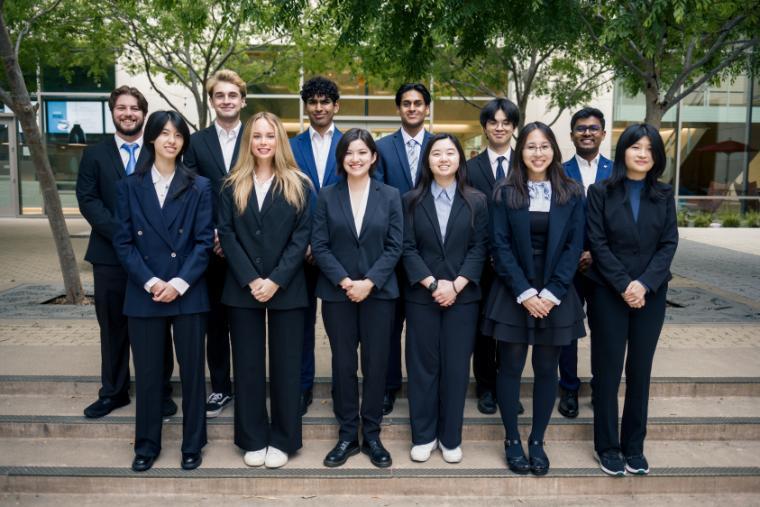
Not all coding happens in lectures and labs. For many students, real learning and connection happen through Association for Computing Machinery (ACM) events and peer support. Jake Esperson ‘26, a Computer Science Engineering major and President of ACM at Santa Clara University School of Engineering, encourages curiosity and discovery outside the classroom.
ACM is a registered student organization that provides computing education, workshops, career support, and community beyond the classroom. With no required registration for meetings and inclusive events and hackathons, ACM is “definitely not exclusive to CS arts and sciences or CS engineering majors — it's for anyone who's interested in computer science,” says Esperson. The leadership team stresses the importance of inclusivity, discussion, and exploration. “We’re really just about fostering a community of like-minded people interested in computer science.”
In addition to weekly meetings on campus events, ACM hosts three hackathons a year, one per quarter, to support causes and companies through the exploration of computer science. The calendar begins with the “Amazon Web Services (AWS) x INRIX Hackathon” in the Fall quarter. This hackathon is focused on industry integration and practical skill application. Winter quarter hosts “Hack for Humanity,” an annual hackathon with a mission to build solutions that serve communities and meaningfully solve problems, sponsored by Santa Clara University Ciocca Center. “What really sets us apart is our longevity, especially relating to our alumni network…we’re on our 13th year this year, and we just continue to get better and better.” Says Esperson. Plans are underway for a Spring quarter hackathon sponsored by ServiceNow for students to gain skills in enterprise tools and platforms used widely in industry.
ACM’s mission centers on passion and purposeful teaching. “If one person were to show up to our workshop, we're still going to teach it the same as if 50 people were to show up. I think it's about the passion,” Esperson says. Engagement and purpose matter more than scale, and “when we see our young ACM members engaging with the material and giving feedback, that's our source of truth.” This culture reflects ACM’s emphasis on hands-on learning, mentorship, and support from active alumni.
Beyond the classroom, ACM provides a sense of belonging in a major that can feel isolating. “Sometimes this major does not have the best opportunities for socializing with like-minded people, and we really just want to create that community,” Esperson explains. Through shared dedication and interest, ACM cultivates friendship in tandem with connection and technical growth.
As AI becomes increasingly relevant to computer science, ACM takes a thoughtful, education-first approach. Esperson notes that SCU and ACM “are taking a very good approach when it comes to AI development in the classroom,” while warning, “if you overly rely on these AI tools, then you are definitely putting yourself in a worse spot for the future.” He leaves an encouraging message to prospective students: “If anyone is out there wondering, should I even do a CS degree, I would answer yes…people who are staying effective and staying relevant are using AI as a tool.” Together, ACM’s leadership transforms the organization into a space for learning, community, and thoughtful innovation.