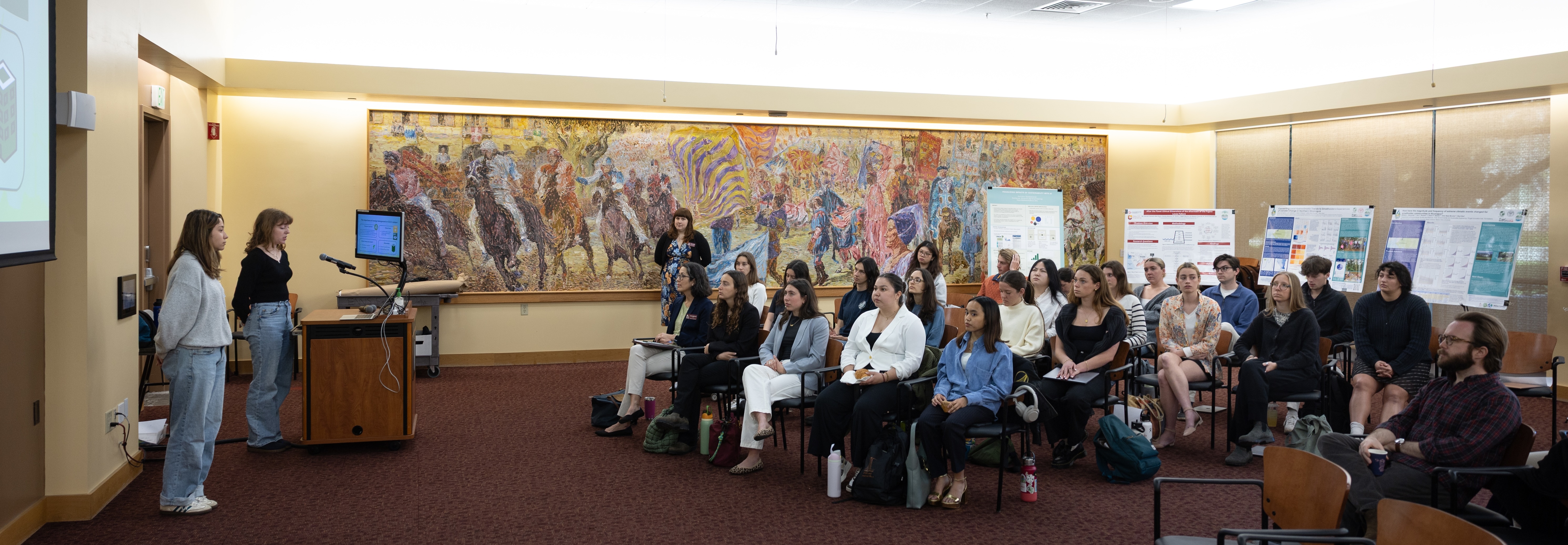
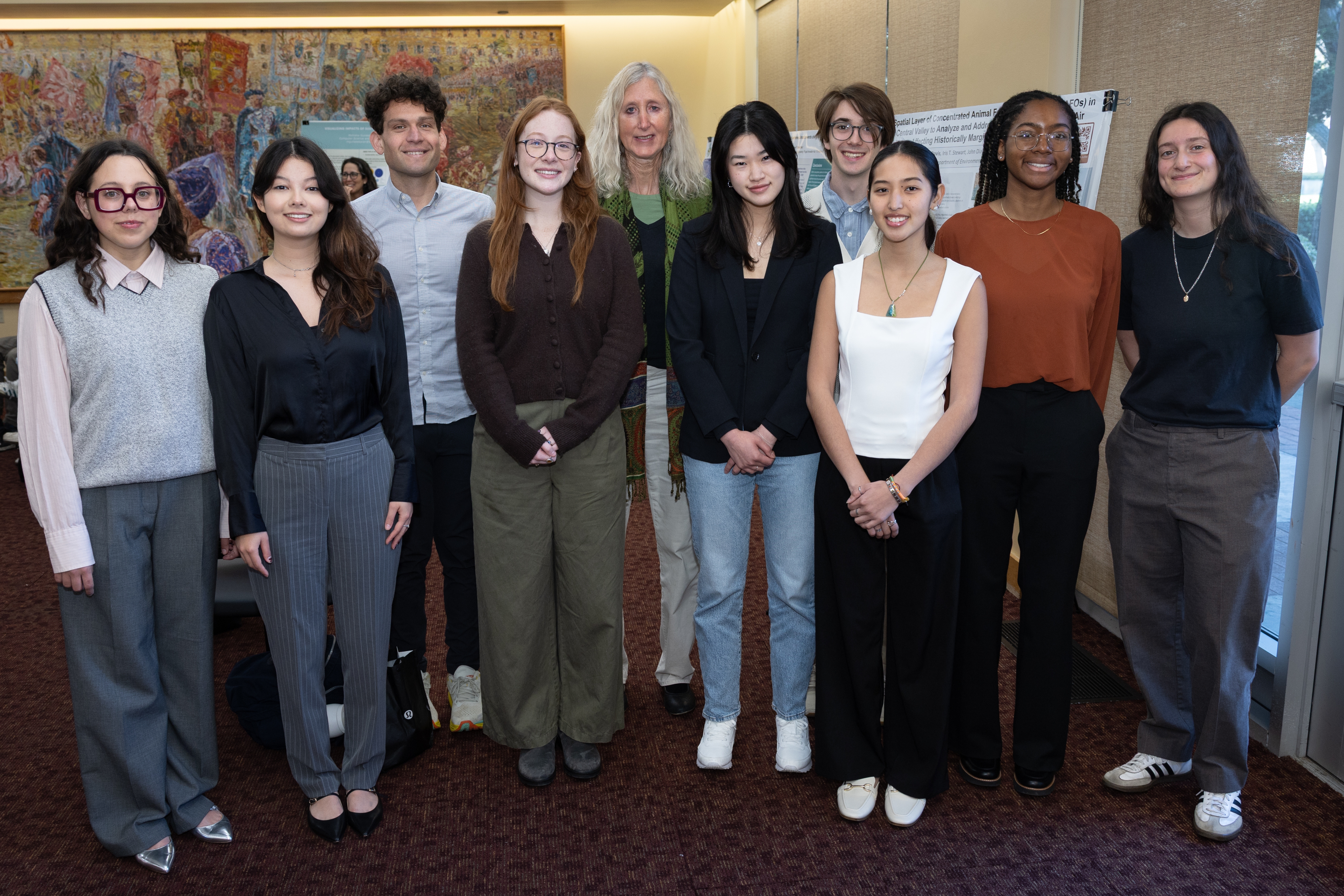
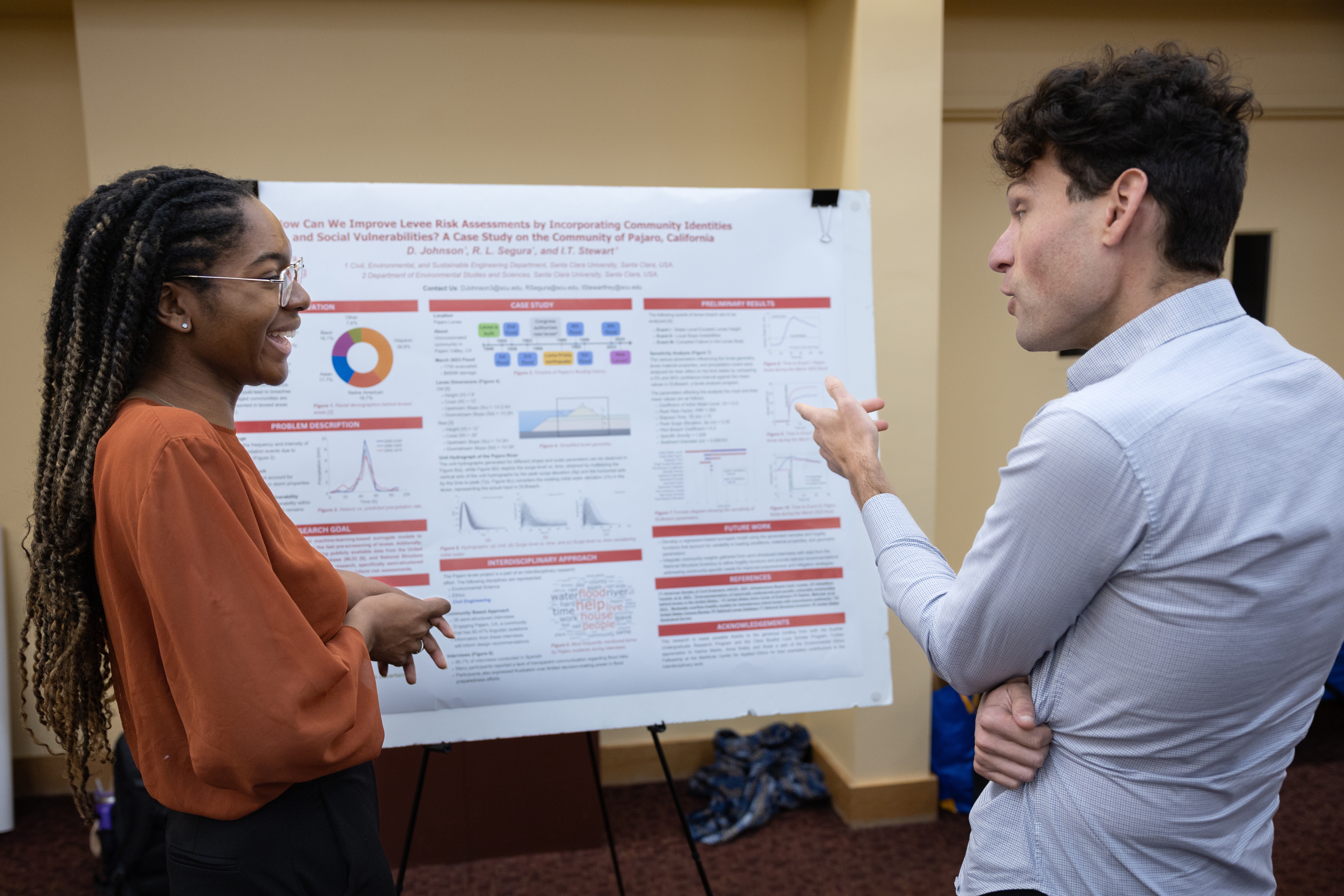
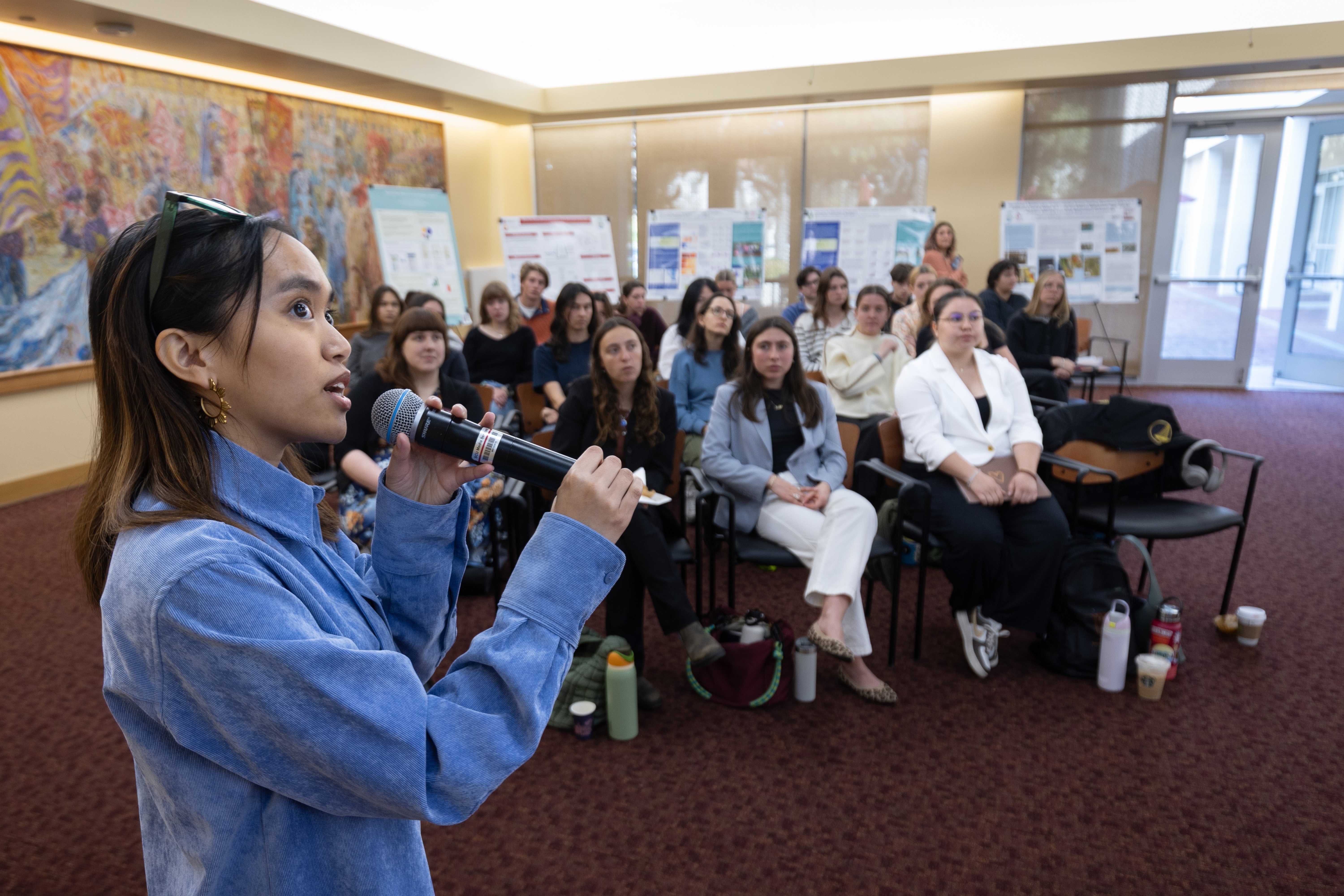
2026 Sustainability & Environmental Justice Symposium
March 10-11 | California Mission Room, Benson Memorial Center
The 2026 Sustainability & Environmental Justice Research Symposium is Santa Clara University’s annual showcase of research projects that advance the common good and protect our common home. The Symposium aims to advance SCU’s Impact 2030 and Leading Through Laudato Si’ goals through:
- Showcasing campus research and thought leadership centered on sustainability and environmental justice that emphasizes solutions for the public and policymakers
- Fostering cross-institutional and interdisciplinary collaboration
- Connecting student attendees to research opportunities across campus
This event is free and open to the public. In compliance with the ADA/504, please direct accommodation requests to sustainability@scu.edu.
RSVP Today!
Let us know that you are attending! Click here to RSVP.
Each set of presentations will be followed by a brief Q&A period.
Tuesday, March 10th Schedule
Session 1A | 9:00 - 10:10 am
Welcome Remarks: Shá Duncan Smith (Vice President, Inclusive Excellence)
Welcome Remarks from Shá Duncan Smith (Vice President, Inclusive Excellence)
LSB Faculty: Policy, Disclosure, and the Climate Economy
Place-Based Green Industrial Policies and Labor Market Expectations (Lightning Talk)
Victoria Wenxin Xie
Despite their growing importance, little is known about how green industrial policies with place-based provisions shape expectations. We provide causal evidence on how such policies influence labor market beliefs and behaviors during the energy transition. Using geographically targeted surveys with randomized information treatments, we show that national policies with localized provisions, particularly the Energy Community Bonus Credit, significantly improve labor market outlooks, increasing expected earnings growth and job-search effort among unemployed workers. These effects are stronger in areas with higher energy-sector employment shares but are attenuated among Republican respondents and individuals who anticipate policy reversal. Uncertainty surrounding policy eligibility further dampens these responses. Overall, our findings illustrate that clearly communicated green industrial policies with place-based components can meaningfully shape expectations in energy communities, with policy credibility playing a central role in belief formation.
Disclosure Changes Under Regulatory Nudge: Evidence from Topic Similarity Across Corporate (Lightning Talk)
Stacey Ritter
Climate disclosures are fragmented across voluntary CSR reports and mandatory 10-K filings, raising concerns about selective disclosure and inconsistent messaging. We examine whether firms align reporting in response to regulatory scrutiny, focusing on the SEC’s 2021 sample climate comment letter highlighting inconsistencies between CSR and 10-K disclosures. Using BERTopic, a machine-learning topic model, we construct a firm-year measure of cross-channel topic similarity. We find that firms significantly increase climate-topic similarity after the SEC’s letter, with no comparable pre-trend. The effect is domain-specific and strongest among firms with lower baseline alignment and greater disclosure capacity, consistent with strategic adaptation. Alignment occurs through selective reallocation of emphasis across outlets—rather than uniform expansion of 10-K disclosure. We also find increased investor engagement with mandatory filings around voluntary report releases following the intervention. Overall, our results show that non-binding regulatory signals can reshape the structure of corporate disclosure environments, not just the content of individual reports.
SBI Research Scholars: Case Studies on Decarbonizing AI Infrastructure
Case Study: Data Centers - Equinix: Balancing AI-Driven Hypergrowth with Decarbonizing Digital Infrastructure (Lightning Talk)
Jacqueline Martinez, Daniel Koo, Nina Mahdawe, Alexis Vuong, Kayla Fong
Equinix is a Redwood Shores-based publicly listed data center operator with approximately $9 billion in annual revenue, operations in 32 countries, and membership in the S&P 500. As demand for cloud computing and AI accelerates, data centers are becoming among the fastest-growing sources of electricity consumption worldwide, intensifying pressure to decarbonize while maintaining reliability and growth. This case examines how Equinix navigates the strategic tension between rapid capacity expansion and ambitious climate commitments, including efforts to improve energy efficiency and procure renewable power. Findings will inform the development of a teaching case for business school sustainability courses. An outline will be presented at this symposium, with the completed case scheduled for presentation at an LSB-SBI event in Spring 2026.
Case Study: Energy - Silicon Valley Power: Meeting Surging Data Center Demand While Advancing California’s Clean Energy Transition (Lightning Talk)
Lana Villegas, Tiffany Doan, Abigail Wilwerding, Sophia Zuchetto
Silicon Valley Power (SVP), the municipal utility owned by the City of Santa Clara, generates approximately $700 million in annual revenue, with a significant share of that revenue derived from energy-intensive data center customers. The utility must navigate rapid load growth and infrastructure investment needs while simultaneously aligning with California’s SB 100 mandate of a greenhouse gas-free system by 2045. This case explores how a vertically integrated public utility balances economic development, affordability, safety, and decarbonization. Findings will inform the development of a teaching case for business school sustainability courses. An outline will be presented at this symposium, with the completed case scheduled for presentation at an LSB-SBI event in Spring 2026.
Case Study: Water - Ingomar Packaging: Optimizing Industrial Water Use in a Seasonal, Drought-Prone Food System (Lightning Talk)
Ella Moyer, Gavin Chen, James Ponzio, Tor Rothrock
Ingomar Packaging, a Central Valley-based industrial tomato processor with approximately $300 million in annual revenue and majority ownership by Japan’s Kagome Group, operates in a water-stressed agricultural region. Its highly seasonal production model concentrates resource use during peak harvest periods, amplifying operational and environmental risks. This case examines how Ingomar integrates water stewardship into its manufacturing strategy while maintaining throughput and product quality. Findings will inform the development of a teaching case for business school sustainability courses. An outline will be presented at this symposium, with the completed case scheduled for presentation at an LSB-SBI event in Spring 2026.
Session 1B | 10:20 - 12:00 pm
Water & Food Justice and Resource Equity
Coproducing a Food Systems Dashboard and Diverse Food Economies in East San Jose (Lightning Talk)
Will Jaspen, Carmel Dill-Cruz
We partnered with Veggielution to examine how community-based data can be linked to a regional food systems workplan in the South Bay. The project began with students co-producing the South Bay Food Systems Data Dashboard through focus groups, GIS analysis, and webwork. Later, student RAs launched V2.0 with improved design and translations. We conducted rapid user surveys at events in East San Jose. Over 90% of respondents rated the website accessible and easy to navigate, and 60% found the translation button quick and easy to use. Only 37% of respondents found the information very easy to navigate, and the formatting on mobile devices was problematic. In response, we adjusted web page displays to make formatting on mobile devices more seamless. We also supported 5 entrepreneurs from the East Side Growers Program by creating profiles that showcase their menus, cultural knowledge, stories, and sustainable catering models. Crucially, entrepreneurs and staff used these dashboard profiles to help secure values-based catering contracts and convince Santa Clara County to streamline permitting for home-based food enterprises. Other data dashboards rely solely on publicly available data; few are rooted in the community’s lived experiences. We suggest that integrating food systems governance plans with ongoing civic engagement, as we have done by linking a community-based food data dashboard that combines storytelling and data with goals and metrics, generates synergistic benefits.
Linking Concentrated Animal Feeding Operations to Groundwater Nitrate Contamination Using High-Resolution Geospatial Analysis (Lightning Talk)
Chien Ju (Casper) Huang
Concentrated Animal Feeding Operations (CAFOs) are a major source of pollution in California and have been linked to groundwater contamination. California has one of the biggest livestock and dairy operations in the United States, particularly in the Central Valley, where shallow aquifers and intense livestock density create vulnerability to water quality degradation. Communities in these regions experience excessive exposure to groundwater nitrate contamination, and the lack of documented spatial patterns of risk remains large. One of the key challenges of this study is identifying the source of contamination and how it statistically relates to CAFOs, as pollutants are diffused into water. Recent progress in geospatial analysis allows us to visualize the locations at the synoptic scale through remotely sensed imagery. This study leverages high-resolution satellite data in combination with nonprofit and academic datasets on CAFO locations to classify all operations in the Central Valley exhaustively. We also aim to examine the spatial relationship between CAFO types, waste lagoons, and water quality across the central valley using geospatial analysis techniques. We hypothesize that CAFOs with waste lagoons on-site will show extensive nitrate levels, which pose greater risks to nearby communities. We hope that our findings may eventually contribute to better animal sewage management, ultimately eliminating the environmental justice issues in vulnerable rural communities.
Agriculture and Groundwater Contamination in Domestic Wells of California’s Central Coast’s Rural Communities (Lightning Talk)
Gabrielle Henrich, Sophia Toribio, Briana Guingona
Industrial agriculture has significant environmental impacts on the local communities in which they operate including the contamination of shallow groundwater with nitrates and heavy metals. These contaminants pose a threat to the long-term health of residents that rely on domestic wells for potable water. California’s Central Coast is a relevant case study for these risks as there is a high volume of agriculture operations in rural farmworker communities relying on groundwater for domestic water supply. This research analyzed available groundwater quality data and tested contamination levels in domestic wells on a quarterly basis beginning in April 2025. We assessed two variables impacting results: (1) seasonal differences in weather affecting the dilution of contaminants in groundwater supplies and (2) distance from the contamination source (irrigated fields) and domestic well. Preliminary results showed a strong correlation between nitrate levels and distance to irrigated fields. Nitrate results above the Maximum Contaminant Level were only seen at test sites near irrigated fields. Contamination results showed seasonal variability; however, a comprehensive analysis of weather conditions and agricultural practices are required to understand the source of variance. These results indicate some of the vulnerabilities communities near irrigated fields are exposed to, and highlights the change needed in industrial agricultural practices to better protect and serve communities.
Water, Climate, and Justice in a Cadillac Desert named California (Lightning Talk)
Iris Stewart-Frey
California’s water crisis is precipitated not only by physical variability and scarcity, but by imbalances in power and justice. This presentation examines how climate change intensifies long-standing inequities in water access across the state. Prolonged droughts, extreme precipitation, groundwater depletion, and declining water quality intersect with water rights, infrastructure decisions, and political economies that have consistently favored agricultural and urban interests while burdening low-income and historically marginalized communities. Using interdisciplinary methods that integrate hydrologic and statistical modeling, geospatial analysis, policy research, and community-engaged case studies, this study explains patterns of water The presentation situates these findings within California’s paradoxical identity as a “Cadillac Desert”, a landscape engineered for abundance through massive water infrastructure, yet a state that is increasingly vulnerable under water overuse and climate stress while being the first to recognize the human right to water. To develop pathways toward more equitable and resilient water futures, climate adaptation must move beyond technical fixes to incorporate integrated water management practices, conservation, environmental justice, ethical considerations, and participatory governance.
Community-Centered Design for Climate Resilience: The NicaAgua App (Lightning Talk)
Qiuwen Li
A collaborative team from Santa Clara University partnered with a Nicaraguan NGO to develop the NicaAgua app, a climate forecasting tool for smallholder farmers in Nicaragua, which began as a senior design project by computer engineering students. The project applies community-centered design principles to make complex climate data accessible, using intuitive shapes, symbols, and visual attributes to ensure forecasts are understandable across linguistic and geographic contexts. To connect scientific information with local knowledge, we employed participatory research methods, including surveys, focus groups, and workshops with farming communities. Visual design draws on Gestalt principles to highlight key climate metrics, supporting actionable decision-making at the community level. This presentation will highlight insights from the design process, showcasing student-led research, participatory engagement, and human-centered visualization strategies, offering a model for integrating sustainability, environmental justice, and community collaboration in digital humanitarian projects.
Riparian Resilience and Indigenous Wisdom
Roots and Resilience in Maya Communities (Lightning Talk)
William Alexander, Sofia 'Ximena' Garcia-Isabelli
Building resilience to climate change and at the same time preserving knowledge on Indigenous agricultural practices in smallholder farming communities are a pervasive concern throughout Central America. This study supports the development of the Maya Roots mobile app for Tahcabo, Yucatan (MX), which will serve as a resource for facilitating intergenerational exchange of indigenous knowledge, as well as strengthening community climate resilience. Our particular focus is to identify the locations of cenotes (sinkholes), archaeological sites, and tree canopy density in the study area. LiDAR scans produced for Tahcabo and the surrounding region have produced a digital elevation model (DEM) that represents the topographic surface. Using ArcGIS Pro,a Red Relief Image data layer was produced, from which topographical features are digitized to identify cenotes and Maya archaeological sites. A forest canopy height model will be used to determine canopy cover height. These metrics and map locations are important for agricultural decision making in the community. Analyses of these scans will be used as a resource available to the residents of Tahcabo so as to delineate what features lie on the village’s common-land holdings– ejidos– and the surrounding region. As many of the smallholder farmers in the area are vulnerable to losing their cultural knowledge due to outside business entrepreneurs incentivizing the sale of these ejidos.
A River Health Report Card (Lightning Talk)
E. Mila Erceg, Austin Kaneko, Aryn Kaul
Rivers are increasingly altered by human land use—loss of riparian habitat, channel modification, and pollution from agriculture and industry—so integrated river health assessments are essential for management. By integrating water-quality indicators with landscape and riparian condition metrics in a partner grading framework, our project produces river health grades for Tuolumne River Trust planning and outreach. Using spatial analysis and secondary data synthesis, we combine layers including agricultural/industrial pollution, dissolved oxygen, nitrate, riparian extent, protected area coverage, and a composite score. Across five monitored sites, water chemistry is generally favorable (high dissolved oxygen; near-neutral pH). However, nitrate is elevated, indicating nutrient enrichment tied to land-use pressures and lowering composite grades. Corridor conditions further constrain health: riparian habitat is sparse and protected area coverage is low in several segments, increasing exposure to runoff, fragmentation, and development. Overall, the lower Tuolumne watershed shows impaired health— Seen as “good water quality in a stressed landscape”. Priorities include nutrient reduction, riparian buffer expansion, and land protection. An interactive map lets users explore grades and underlying indicators by location to support education and partner-led outreach.
The Dominance of Invasive Species Along the Salinas River Riparian Corridor (Lightning Talk)
Uriel Ramirez, Justin Chan
Invasive species have greatly impacted riparian ecosystems in California by competing with native species and dominating the riparian habitat, altering the biodiversity and health of the river. Increased anthropogenic activity, wildfires, and flooding have all contributed to the dominance of invasive species. The Salinas River in Monterey County is one such example of a disturbed riparian ecosystem. Previous research has determined the abundance of invasive species along the Salinas River, as well as metrics related to the river's health and historical riparian cover. Our research aims to build upon existing data on invasive species and further document the abundance and species diversity at three sites along the lower Salinas River. To execute this, we will survey the current biodiversity using transects at the field sites. Based on the data we collect, we will compare it to a prior study from six years ago, and grade certain metrics of the river based on the California Riparian Rapid Assessment Method. These metrics are the zone width based on the 100 year floodplain, macroinvertebrate habitat patch richness, anthropogenic alterations to channel morphology, and total vegetation cover. We aim to produce GIS maps and data tables that effectively communicate the variety and abundance of plant species. This research could be beneficial to local agencies and NGO’s to push for change along degraded riparian habitats and work towards restoration.
The Ethics of the Mechanocene: AI, Labor, and Repair
The Mechanocene: Humans, AI, and a Theory of Repair for our Epoch of Ecological Crisis (Lightning Talk)
Gavin Brunsman
The crisis of climate change is also a crisis of meaning. In this talk, I draw on questions that lie at the heart of my ongoing thesis project, The Mechanocene: Humans, AI, and a Theory of Repair for our Epoch of Ecological Crisis. My larger project lies at the intersection of Religious Studies and the Environmental Humanities. Working with Professor Mehta (Religious Studies), I combine ethnographic and theoretical research to investigate the role of mechanization in shaping relationships between humans, technology, and the environment. How did we come to inhabit a “human vs. nature” binary? How did extraction become our primary mode of engaging with landscapes? How have extractivist practices shaped what it means to be human? How is artificial intelligence positioned within these relationships of extraction? To answer these questions, I propose the term “Mechanocene.” Mechanocene accounts for the collective mechanization of humans, landscapes, and technologies that has produced a crisis of meaning, ethics, community, and cosmology. Recognizing the history of this mechanization offers us possibilities of repair. How might we forge relationships with nature and each other that subvert the logic of extraction and the experience of alienation and mechanization? Drawing on scholars such as Donna Haraway, Tulasi Srinivas, Michael Jackson, and Marcel Mauss, I foreground ideas of body, movement, and relationality to propose theories of repair for our epoch of ecological crisis.
Seeing the Future: How AI Can Predict and Explain Disasters Before They Happen (Lightning Talk)
David C. Anastasiu
To achieve safe and secure working environments, we must move beyond reactive safety measures. Traditionally, video surveillance in industrial settings has been used to detect accidents or failures only after they occur. This talk explores a shift toward proactive social sustainability through "Video Anomaly Anticipation." I will discuss how AI can predict hazards in high-risk environments, such as factory floors or busy intersections, seconds before they happen, potentially preventing injuries to workers and marginalized populations often employed in precarious roles. However, to truly support a decent work environment, these systems cannot act as "black boxes." If an AI halts production to prevent an invisible accident, it risks alienating the workforce. Therefore, I will demonstrate how we are building explainable AI that visually articulates the "future it avoided." By prioritizing transparency, we can create technology that doesn’t just monitor workers, but partners with them to ensure their physical safety and economic stability.
Session 2A | 3:00 - 3:40 pm
Tech-Enabled Empowerment and the Universal Good
Empowering Indigenous Communities Through Water Access (Lightning Talk)
Chan Thai
Goal #6 of the UN’s SDGs is ensuring access to water and sanitation for all. Data from as recent as 2020 show that two billion people live without safely managed drinking water services, including 1.2 billion people lacking even a basic level of service. Eight out of 10 people who lack basic drinking water service live in rural areas, and about half of them live in least developed countries. In the Philippines, this inequity is further exacerbated, as water service delivery remains devolved and dependent on local governments. Thus, projects that focus on access to water remain key to the safety and health of rural communities in the Philippines. Alternative Indigenous Development Foundation, Inc (AIDFI; https://www.aidfi.org/) has been installing water pumps to empower indigenous and upland communities with running water for the past 25 years. Through engaging with AIDFI for the past 4 years, I have learned more about their process of community engagement. AIDFI works with communities intentionally and thoughtfully to understand the unique challenges of each community. Water systems are then developed based on each community’s unique needs to ensure they will be sustained, which then impacts the social and economic wellbeing of the community members, in particular women. In this presentation, I will outline AIDFI’s process of holistic community development and share case studies of communities that demonstrate the success of their model.
A Look at Jibu's Point of Sale System (Lightning Talk)
Cecelia Fox-Middleton, Erik Pompermayer
Our research examines the relationship between Jibu franchises and the technology they rely upon to conduct their most critical business operations. Jibu’s Point of Sale (POS) System is the online platform where Jibu franchises track sales, inventory, production, and delivery. While Jibu franchises agree that this iteration of the POS is the best of the three previous technology systems, it still has significant limitations that affect its usability. The POS system is serviceable at tracking big picture numbers like total sales, customers, and liters sold. However, the system struggles with quick transaction speed, lacks essential features, and regularly confuses even experienced Jibu employees, making much of the inputted data incorrect or quickly obsolete. As a result, many employees and franchise owners, especially in the Rwandan market, see the POS as more of a distraction than an essential business tool. Not only do issues with the adoption of the POS system affect the franchise operations, but it also hinders Jibu’s mission of providing safe, accessible drinking water and creating economic opportunities. Overall, we recommend strengthening Jibu’s POS system by adding essential inventory and delivery features, improving onboarding and ongoing training, and simplifying the interface for faster, more efficient, and more user-friendly franchise operations.
Inkomoko Capital: Advancing Sustainable Finance & Gender Equity (Lightning Talk)
Isabelle Pink
Access to finance is one of the most persistent barriers to entrepreneurship across Africa, particularly for refugees and women-owned businesses. Inkomoko, a social enterprise currently operating across five countries in East and Central Africa (Rwanda, Kenya, Ethiopia, South Sudan, and Chad), has sought to close this gap by providing business development services and affordable loans to underserved entrepreneurs. As the organization continues to grow, questions have emerged around how to sustain and scale its financial operations without compromising its social mission. This project was designed to explore how Inkomoko’s investment arm could evolve into an independent microfinance institution (MFI) and what that transformation would mean for both the organization and its clients. The goal was not only to assess the feasibility of a spin-off but also to identify mechanisms to ensure equitable access to finance, particularly for women entrepreneurs.
Session 2B | 3:50 - 6:15 pm
Narratives of Resilience and the Human Right to Water
Carbon Traces (Creative Work)
Stefie Gan
"Carbon Traces" an animated film that reflects on humanity’s fractured relationship with the natural world, tracing the shift from harmony to exploitation driven by overconsumption. Through abstract and symbolic imagery, the film explores how this imbalance fuels disconnection and an emerging existential crisis, while posing the question of whether balance can be restored between humans and the environment. Supported by a grant from Voices with Impact and the California's Mental Health Commission, "Carbon Traces" uses animation as a contemplative medium to connect environmental degradation with collective psychological well-being and the urgent need for reconnection with nature.
Cultivating Community Connection: Storytelling and Food Access in East San José (Creative Work)
Annabel Harris, Nash Fuetsch, Emma Hardie, Shivani Glynn
Efforts to address food insecurity are often analytical, measuring quantitative data rather than understanding people's lived experiences. This project aims to uplift the voices, knowledge, and lived experiences of community-based food leaders and small-scale farmers. Developed in collaboration with Veggielution, this study centers mixed-status households, low-income residents, small farmers, immigrant families, and food entrepreneurs whose perspectives are frequently underrepresented in agricultural policy and food system decision-making. Through interviews and anonymous community surveys, participants were invited to share their experiences and the obstacles they face with food access and institutional barriers, as well as the ways they cultivate resilience, collaboration, and opportunity in their communities. As a result of our research and interviews, we produced two short documentary films that amplify the voices of community food leaders to be shared on Veggielution’s website and public storytelling platforms. The project builds on the South Bay Food Justice Data Dashboard by adding qualitative context to the maps and figures. Findings will support Veggielution’s future outreach, programming, and storytelling efforts. This project contributes to broader efforts to strengthen community-based food systems and advocates for transformative action.
The Effect of CAFOs on Nitrate Groundwater Contamination in the Central Valley (Lightning Talk)
Aayush Kumbhare
Groundwater nitrate contamination poses a critical public health challenge to California’s Central Valley, where millions depend on groundwater for their day-to-day operations. Nitrates are one of the most common pollutants in the Central Valley due to the high amounts of runoff from the farms and Concentrated Animal Feeding Operations (CAFOs). This research focuses on the evaluation of dairy characteristics on CAFOs in the Central Valley and their relation on groundwater nitrate contamination We used extraction of publicly sourced information on over 300 dairies and mapped the location of CAFOs, and correlated that data to nitrogen groundwater contamination in the Central Valley. The correlation between the two is conducted via geospatial regression, spatial autocorrelation techniques, and other multivariate statistical models. Thus far a robust geospatial database of CAFO location, herd size, nutrient and waste information, and water use has been created. We expect to find between waste and nutrient amounts (lbs) generated, resource use, and groundwater contamination , which may support policymakers to evaluate regulations currently in place to reduce groundwater contamination.
Data Analysis of Groundwater Contamination in the Central Coast (Lightning Talk)
Austin Kaneko
Groundwater contamination in the Central Coast is a prominent issue that disproportionately impacts certain communities (Latino/a, linguistically isolated, and low-income). Issues with saltwater intrusion, arsenic, uranium, chromium, TCP 123, and Nitrate persist throughout the Central Coast. Although the state of California provides a database for all tests aggregated from the USGS, Department of Water Resources, and others, crucial information is still missing. This missing information, such as well depth and the lack of repeat testing, makes quantifying the true extent of contamination challenging. This study seeks to leverage geospatial well data to show how often the depth of the well is missing and how few repeat sampling there is. In addition, this work will measure the temporal trends of contamination where testing amounts allow (4 or more samples over the last decade). Leveraging ArcGIS and RStudio, I obtained data on the number of tests conducted at each well site, the time range over which the tests were conducted, the mean and median nitrate values for each well, and the well depths. The results of this workflow have yielded a robust dataframe in a csv format, in addition to a geospatial layer to effectively visualize where contaminants are located and where trends are present. Preliminary results show that well information for uranium, nitrate, and TCP 123 lacks substantial repeat tests as well as information on well depth.
Round Table Discussion: Campus Perspectives on Advancing Impact 2030 and Laudato Si'
Join Symposium organizers and co-sponsors leadership representatives in a meaningful conversation about Santa Clara University’s commitment to sustainability, environmental justice, and Laudato Si’. Representatives include Brigit Helms (Executive Director, Miller Center for Global Impact), Brian Thomas (Faculty Associate, Sustainable Business Institute), Daniel Press (Dean, College of Arts and Science), Ft. Matthew Carnes, S.J., (Vice President, Mission and Ministry), Sean Collins (Associate Vice President, University Operations), Lindsey Kalkbrenner (Director, Center for Sustainability), Christopher Bacon (Professor and Department Chair, Environmental Studies and Sciences Department), and Iris Stewart-Frey (Co-Coordinator, Environmental Justice and the Common Good Initiative). The roundtable will be facilitated by Shá Duncan Smith (Vice President, Inclusive Excellence).
Co-Sponsor Tabling Session
Co-Sponsor Tabling Session | 5:30 - 6:15 pm
Learn more about the research and student involvement opportunities offered by the 2026 symposium co-sponsors immediately outside the California Mission Room in the Benson Student Center!
Session 3 | 6:15 - 7:30 pm
Environmental Studies and Sciences Capstone: Actionable Research for the Common Good
Developing Recovered Food Hubs in Silicon Valley (Poster)
Caitlin DeLaMora, Vansh Malik, Jenna Martinez, Anna Keenan
Santa Clara County (SCC) produces over 50 million pounds of surplus food, yet 31% percent of county residents are reported to be at risk of food insecurity, lacking reliable access to proper, affordable nutrition. Additionally, SCC produces approximately 40,000 tons of food waste annually. Food waste decomposes in landfills, producing greenhouse gas emissions, posing a pressing public health and environmental issue. California’s food waste law (SB 1383) addresses this challenge. We aimed to provide actionable insights that enable local farmers to donate more surplus produce, identifying ways to divert food loss from local farms to recovered food hubs, turning potential loss into a community resource that can be distributed to combat food insecurity. We used a mixed-methods approach, combining semi-structured stakeholder interviews and surveys to identify the primary barriers to farm-level food donation. This research demonstrated how farmers' conditions affect their likelihood of engaging food recovery programs, directly informing the operational design of Joint Venture’s recovered food hubs. Misalignment between regulatory mandates and operational realities; specifically, the complexity of claiming the tax incentives of SB 1383, significant logistical barriers in cold-chain management, and high labor costs of continuous staff retraining render food recovery impractical for many commercial generators. In the future, pragmatic donation options need to be offered to farmers.
Community-based Climate Vulnerability Assessment of Alviso (Poster)
Grace Falci, Addie Chappelle, Alex Crouse, Gigi Jones
Located at the southern end of San Francisco Bay, Alviso is a historically underrepresented community facing disproportionate impacts of climate change. San José has directly contributed to Alviso’s infrastructure instability, particularly after its controversial 1967 annexation, which excluded Alviso residents from municipal planning processes. Alviso currently ranks in the upper quartile statewide for environmental burden with high exposure to hazardous waste, linguistic isolation, impaired waterways, and solid waste facilities. Our study produced a Community-Led Climate Vulnerability Assessment that centers resident knowledge and integrates it with environmental data to support equitable climate planning. We used a participatory, co-production research approach that integrated GIS mapping, CalEnviroScreen 5.0 data, archival research, and qualitative interviews and surveys with community members. We examined how residents perceive environmental risk and resilience, which adaptation strategies residents prioritize, how Alviso’s political history shaped trust in local government, and tangible interventions. By emphasizing shared authority and reciprocal relationships in knowledge production, this project elevates lived experience as the cornerstone of data. The resulting assessment is accessible to residents and decision-makers alike, offering a practical tool for justice-centered climate adaptation, long-term resilience, and community-based evacuation planning in Alviso.
Modeling Cooling Mitigation Strategies for Modesto Disadvantaged Communities using the Stanford InVest Urban Cooling Model (Poster)
Carmel Dill-Cruz, Graciella James-Hickey, Carly Asherman
This research investigates effective cooling mitigation strategies in reducing air temperature in Modesto, California. Historically, low-income and vulnerable communities are disproportionately affected by extreme heat and poor air quality. Through collaboration with Valley Improvement Project, we identified zip codes in Modesto that are at the highest risk of this environmental injustice. Our goal is to provide informative maps of the best cooling mitigation strategies for potential implementation. This research is being conducted through a combination of data layers: evapotranspiration, land cover, surface temperature, tree canopy, albedo, and vegetation index. These data layers are input into the Stanford Urban Cooling InVEST Model, which diagrams the Urban Heat Island effect in the area of Modesto. Utilizing this model, we employ different levels of tree canopy coverage into the model to determine the effects of its increase on land surface temperature. We expect to find that increased tree canopy coverage can combat the urban heat island effect in Modesto. The Urban Cooling model will generate a map demonstrating the extent of cooling given different scenarios of increased tree canopy or albedo. The implications of this finding suggest that extreme heat in Modesto can be combatted through enhanced tree canopy coverage. In the future, the county can apply for governmental grants and enhance community awareness, to make a decisive effort to plant more trees in the area.
The Impact of Extreme Heat Events and Poor Air Quality on Hospitalization Rates in Stanislaus County (Poster)
Shea Mulqueeney, Rachel Lin-Peistrup, Kyle Berg, Rosie Houghton
Utilizing quantitative research methods, this study examines how air quality and heat spatially and demographically correlate with asthma hospitalizations within Stanislaus County. Through the examination of emergency department visit rates by zip code we aim to identify whether asthma hospitalization rates cluster in areas that experience higher levels of air pollution (e.g. PM 2.5, Ozone) and elevated temperatures, this can provide graphics and scientifically backed maps that allow (VIP) to employ spatially explicit, data-driven evidence of how environmental conditions contribute to respiratory health disparities in Stanislaus County. Modesto sits in the center of agricultural land in the Central Valley of California; the geographic context of Modesto puts the city in a vulnerable position to experience higher heat and concentrated air pollution. Our research has been conducted through the usage of Geographical Information Systems, literature reviews, and statistical analysis. Data provided by Stanislaus Health Agency and CalHHS provided us with hospitalization rates allowing the calculation of relative risk ratios. Using projected heat data, modeled analysis of days of extreme heat were produced along with spatially distributed demographic data. Preliminary results show that Stanislaus County residents are at 84% increased risk for asthma emergency department visits compared to San Mateo County residents.
Santa Clara County SOVI (Poster)
Carson Yano, Billy Storer, Hanna Tedla
Our research question asks how socioeconomic and environmental variables, such as income, housing characteristics, language isolation, and tree canopy coverage, contribute to spatial differences in heat vulnerability and other hazard vulnerability (sea level rise, air quality) and access to energy-efficient resources across Santa Clara County. Although the county is widely recognized for its economic prosperity, substantial disparities persist within the county, particularly among low-income, immigrant, and historically marginalized communities that face disproportionate exposure to heat-related risks and limited access to adaptive resources. We are investigating this question to identify where and why these vulnerabilities occur and to make equitable climate resilience planning an urgent priority, especially as climate change intensifies the frequency and severity of extreme heat events. We will leverage geospatial statistics and a principal components analysis to quantify exposure, sensitivity and priority scores by clock group for targeted extreme heat mitigation.
The Dominance of Invasive Species Along the Salinas River Riparian Corridor (Poster)
Uriel Ramirez, Justin Chan
Invasive species have greatly impacted riparian ecosystems in California by competing with native species and dominating the riparian habitat, altering the biodiversity and health of the river. Increased anthropogenic activity, wildfires, and flooding have all contributed to the dominance of invasive species. The Salinas River in Monterey County is one such example of a disturbed riparian ecosystem. Previous research has determined the abundance of invasive species along the Salinas River, as well as metrics related to the river's health and historical riparian cover. Our research aims to build upon existing data on invasive species and further document the abundance and species diversity at three sites along the lower Salinas River. To execute this, we will survey the current biodiversity using transects at the field sites. Based on the data we collect, we will compare it to a prior study from six years ago, and grade certain metrics of the river based on the California Riparian Rapid Assessment Method. These metrics are the zone width based on the 100 year floodplain, macroinvertebrate habitat patch richness, anthropogenic alterations to channel morphology, and total vegetation cover. We aim to produce GIS maps and data tables that effectively communicate the variety and abundance of plant species. This research could be beneficial to local agencies and NGO’s to push for change along degraded riparian habitats and work towards restoration.
Identifying Barriers to Food Security in Santa Clara County Supportive Housing Sites (Poster)
Olivia Reifschneider, Will Jaspen, Addison Lewis
Although Silicon Valley is one of the wealthiest areas in the nation, the average rate of food insecurity is 19.3%. Among residents of supportive housing sites, which are shelters for unhoused communities, high rates of food insecurity persist at approximately three times the expected level (Parpouchi & Somers, 2019). Santa Clara County (SCC) has 3,832 temporary housing beds, which can support about 1/3rd of unhoused people in SCC. However, providing shelter alone is insufficient. Despite the known overlap between housing and food vulnerability, little integrated research has examined how these vulnerabilities exacerbate one another. We seek to determine to what extent supportive housing residents within SCC are food insecure and how this can be addressed by the County and connected non-profits. Preliminary findings suggest the need to create a more centralized, communicative network to reduce food waste. The findings also highlight the importance of diversifying county funding to better support food system stakeholders, particularly non-profits sustaining this network despite limited support. By conducting interviews and surveys with supportive housing residents, housing managers, and food supplier representatives, we hope to present our findings to policymakers to advocate for changes to food system policy in relation to supportive housing sites across the County. When both food and housing insecurity are caused by poverty, it is clear that they must be addressed in tandem.
Our Collective Responsibility to the Human Right to Water in California: An Ethical Dilemma (Poster)
Andrew Miller Schatz, Samantha Lei, Caleigh Detels
California is the first state to legally recognize the human right to water (AB 685) in the United States. Nevertheless, in the Central Valley, where over 25% of our nation’s food supply is grown, excessive modern agricultural practices (e.g., fertilizers, Concentrated Animal Feeding Operations, and pesticides) contaminate the groundwater, resulting in over 100,000 residents, dependent on domestic wells, experiencing unsafe drinking water. In these rural regions, where disadvantaged communities predominantly identify as Hispanic, an increased risk of long-term health (i.e., digestive cancers) and economic consequences follows. Despite this longstanding issue, the ethical dimensions surrounding this right have not been sufficiently addressed by the state and industry stakeholders. We will explore how the Rights, Justice, Common Good, Virtue, and Care Ethics lenses are applied when addressing drinking water accessibility, which contaminants remain the most hazardous, and what ethical obligations stakeholders have to ensure the human right to water. To do so, our ethical framework will incorporate the aforementioned ethical lenses to analyze GAMA water quality data and quantify the health burden they have been facing. The human right to water is an ethical imperative, and our ultimate goal is to promote the incorporation of ethics into the decision-making process across these areas of responsibility to both protect our human rights and natural resources.
Roots and Resilience in Maya Communities (Poster)
William Alexander, Sofia 'Ximena' Garcia-Isabelli
Building resilience to climate change and at the same time preserving knowledge on Indigenous agricultural practices in smallholder farming communities are a pervasive concern throughout Central America. This study supports the development of the Maya Roots mobile app for Tahcabo, Yucatan (MX), which will serve as a resource for facilitating intergenerational exchange of indigenous knowledge, as well as strengthening community climate resilience. Our particular focus is to identify the locations of cenotes (sinkholes), archaeological sites, and tree canopy density in the study area. LiDAR scans produced for Tahcabo and the surrounding region have produced a digital elevation model (DEM) that represents the topographic surface. Using ArcGIS Pro,a Red Relief Image data layer was produced, from which topographical features are digitized to identify cenotes and Maya archaeological sites. A forest canopy height model will be used to determine canopy cover height. These metrics and map locations are important for agricultural decision making in the community. Analyses of these scans will be used as a resource available to the residents of Tahcabo so as to delineate what features lie on the village’s common-land holdings– ejidos– and the surrounding region. As many of the smallholder farmers in the area are vulnerable to losing their cultural knowledge due to outside business entrepreneurs incentivizing the sale of these ejidos.
A River Health Report Card (Poster)
E. Mila Erceg, Austin Kaneko, Aryn Kaul
Rivers are increasingly altered by human land use—loss of riparian habitat, channel modification, and pollution from agriculture and industry—so integrated river health assessments are essential for management. By integrating water-quality indicators with landscape and riparian condition metrics in a partner grading framework, our project produces river health grades for Tuolumne River Trust planning and outreach. Using spatial analysis and secondary data synthesis, we combine layers including agricultural/industrial pollution, dissolved oxygen, nitrate, riparian extent, protected area coverage, and a composite score. Across five monitored sites, water chemistry is generally favorable (high dissolved oxygen; near-neutral pH). However, nitrate is elevated, indicating nutrient enrichment tied to land-use pressures and lowering composite grades. Corridor conditions further constrain health: riparian habitat is sparse and protected area coverage is low in several segments, increasing exposure to runoff, fragmentation, and development. Overall, the lower Tuolumne watershed shows impaired health— Seen as “good water quality in a stressed landscape”. Priorities include nutrient reduction, riparian buffer expansion, and land protection. An interactive map lets users explore grades and underlying indicators by location to support education and partner-led outreach.
Cultivating Community Connection: Storytelling and Food Access in East San José (Poster)
Annabel Harris, Nash Fuetsch, Emma Hardie, Shivani Glynn
Efforts to address food insecurity are often analytical, measuring quantitative data rather than understanding people's lived experiences. This project aims to uplift the voices, knowledge, and lived experiences of community-based food leaders and small-scale farmers. Developed in collaboration with Veggielution, this study centers mixed-status households, low-income residents, small farmers, immigrant families, and food entrepreneurs whose perspectives are frequently underrepresented in agricultural policy and food system decision-making. Through interviews and anonymous community surveys, participants were invited to share their experiences and the obstacles they face with food access and institutional barriers, as well as the ways they cultivate resilience, collaboration, and opportunity in their communities. As a result of our research and interviews, we produced two short documentary films that amplify the voices of community food leaders to be shared on Veggielution’s website and public storytelling platforms. The project builds on the South Bay Food Justice Data Dashboard by adding qualitative context to the maps and figures. Findings will support Veggielution’s future outreach, programming, and storytelling efforts. This project contributes to broader efforts to strengthen community-based food systems and advocates for transformative action.
Wednesday, March 11th Schedule
Session 4A | 9:00 - 10:20 am
Welcome Remarks: Provost James M. Glaser
Welcome Remarks from Provost James M. Glaser
Food, Water, and Justice: Advancing Community-Centered Sustainability
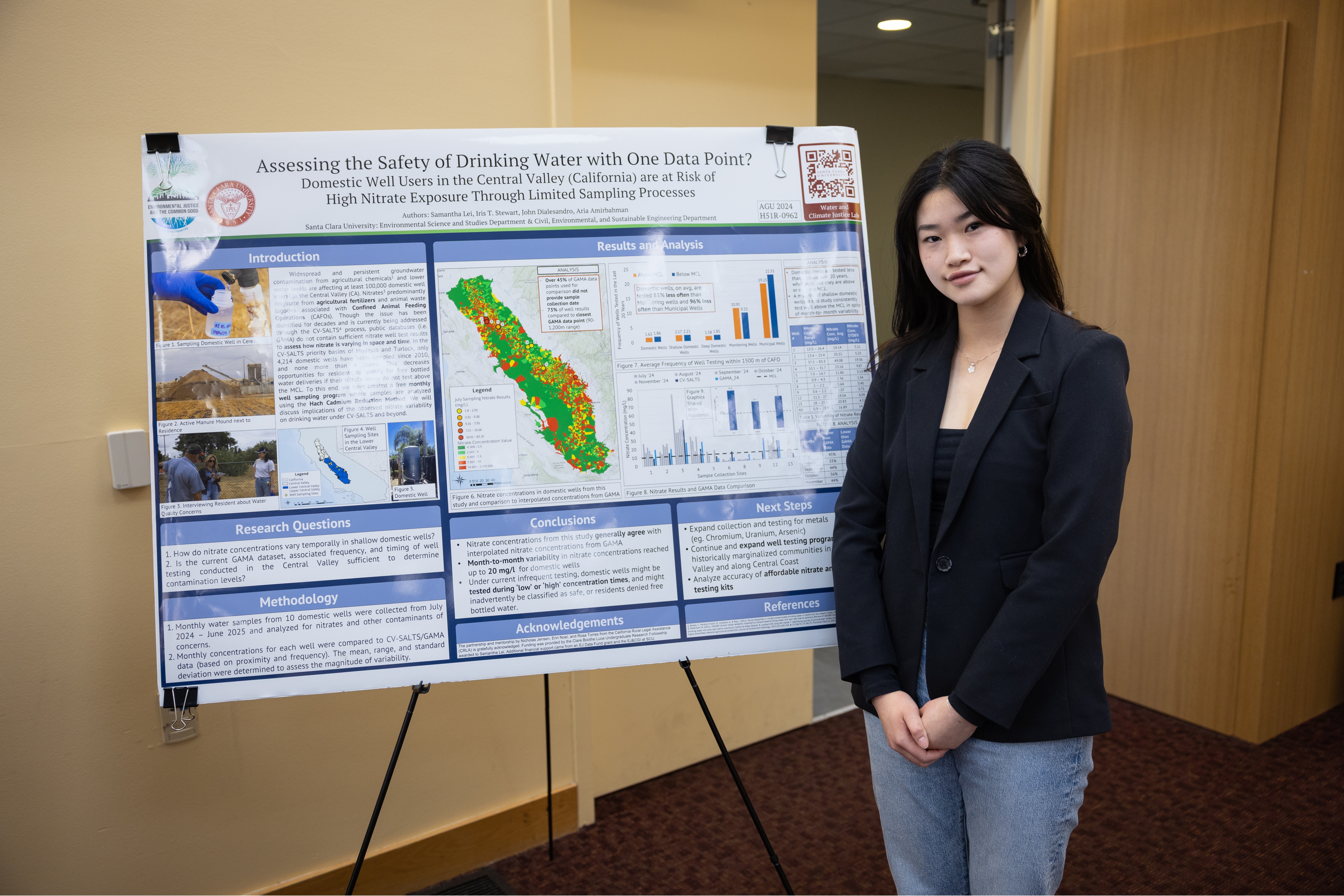
Assessing the Safety of Drinking Water with One Data Point? Domestic Well Users in the Central Valley (California) are at Risk of High Nitrate Exposure Through Limited Sampling Processes (Creative Work)
Samantha Lei
Widespread and persistent nitrate groundwater contamination among shallow domestic wells is affecting at least 100,000 residents in the Central Valley of California. Nitrates predominantly originate from agricultural fertilizers and animal waste lagoons associated with Confined Animal Feeding Operations. Though this issue has been identified for decades and is currently being addressed through the CV-SALTS process, public databases (i.e., GAMA) do not contain sufficient nitrate well test results to assess how nitrate varies in space and time. In Modesto and Turlock, only 4,214 domestic wells have been sampled since 2010, and none more than 4 times. These limited tests decrease opportunities for residents to qualify for free bottled water deliveries. To this end, we created a year-long free monthly well testing program where samples were analyzed using the Hach Cadmium Reduction Method. Our results reveal that nitrate concentrations, with high variability, fluctuate significantly every month, with peaks occurring with the onset of winter rains (October/November) and early spring (concurring with the start of the planting season). These results suggest that cycles of agricultural activities and the accumulation of past nitrates contribute to these elevated concentrations. To ensure the public health of these communities, interannual routine well testing must be conducted to inform effective water policy among these disadvantaged communities.
Analyzing Santa Clara University’s Food Procurement: Measuring Institutional Food System Sustainability, Transformation, and Change (Lightning Talk)
Grace Falci, Isabelle Pink
This research fellowship, co-sponsored by the Center for Sustainability and SCU Auxiliary Services, explores Santa Clara University’s food system’s impact on the environment from both ecological and social perspectives, while identifying opportunities for improvement. Using the framework of the Real Food Challenge, we evaluated dining procurement practices in relation to institutional sustainability commitments outlined in Leading Through Laudato Si’. Specifically, we assessed progress toward developing a robust sustainable purchasing system by 2030, increasing plant-based food spending to 60% by 2028, and ensuring that 30% of food and beverage purchases are sustainably or ethically produced by 2028. Our analysis found that 19.27% of food purchased in February and October 2024 met Real Food criteria, which was 1.24% lower than the same period in 2022-2023 and below the university’s 25% by 2025 target. This decline may reflect reduced investment in qualifying products, changes in data analysis, or updated Real Food standards. To accelerate progress, we recommend shifting produce, chicken, and coffee procurement to sustainably sourced vendors, which could raise Real Food purchasing by 13.3% to over 30%, implementing default-vegetarian dining options to support plant-forward goals, and improving data transparency and communication across dining stakeholders to strengthen long-term tracking and reporting.
Assessing Student Basic Needs & Food Insecurity At Santa Clara University (Lightning Talk)
Amelia Koenig, Abby Wilwerding
During the 2024-2025 academic year, SCU student researchers conducted an integrated basic needs survey that included nearly 900 student responses. The survey results showed that 37% of students were food insecure. We analyzed research questions about students' basic needs within the SCU community and how the Student Basic Needs Committee could improve its efforts to better assist students. Using a mixed-methods approach, both quantitative and qualitative data were collected through an anonymous online survey and in-person interviews. Student researchers used the USDA Food Security Scale to score anonymous responses and categorize students as food-insecure. Preliminary analysis revealed that first-gen and international students experience food insecurity at significantly higher rates than their peers. Additionally, low-income students had more unmet needs than higher-income students. Further qualitative findings were collected through in-person interviews. Student voices revealed insights into the challenges and concerns SCU community members face regarding food access. Cultural relevance, sustainability, and food costs were among the concerns for students. Although the Basic Needs Committee is expanding assistance for students, food insecurity persists in the SCU community. The findings suggest that many students lack awareness of resources, access to culturally relevant food, and affordable meal plan options, indicating the need for further research and increased investment.
California Climate Action Corps Fellowship: Mobilizing SCU to Reduce Food Waste and Address Student Food Insecurity (Creative Work)
Sophia Kennedy, Samuel Waterman, Iris Yuh
As California Climate Action Corps Fellows for the Santa Clara University Center for Sustainability, we engage and empower the SCU community to take climate action by diverting food waste from the landfill. This is relevant because wasted food could instead be redistributed to the 200+ students struggling with food insecurity, and, moreover, food in the landfill produces methane, a potent greenhouse gas that warms the planet. The main methods followed for this work include improving campus waste sorting, redistributing excess food, and composting campus and community food waste on site. After seven months, we have diverted over 5,000* lbs of organic materials from the landfill and redistributed over 1298* lbs of food. These results demonstrate that significant climate action can be accomplished by engaging and educating communities on waste reduction efforts. This work relates to sustainability and environmental justice because we are directly improving food security on campus and taking action against climate change.
* Results are preliminary and subject to increase by time of presentation.
Human-Centered Design for Global Climate Resilience
A Multidisciplinary Sustainability Project to Provide Safe Drinking Water to a Rural Maasai Community in Southern Kenya (Lightning Talk)
Aria Amirbahman
Sustainability projects in engineering must demonstrate technical effectiveness, social acceptance, and long-term economic viability, while meaningfully engaging local stakeholders throughout the planning and implementation process. This multidisciplinary collaboration between Santa Clara University (SCU) and the Catholic University of Leuven (KU Leuven), Belgium, addressed elevated fluoride concentrations in a groundwater well serving a rural Maasai community in southern Kenya. Chronic fluoride exposure in the region poses significant health risks, including dental and skeletal fluorosis.SCU civil engineering students conducted the technical assessment and system design. After evaluating alternative treatment technologies based on removal efficiency, operational simplicity, environmental impact, energy demand, and lifecycle performance, the team recommended a solar-powered reverse osmosis (RO) system capable of reducing fluoride concentrations to meet World Health Organization drinking water guidelines. KU Leuven students carried out a social acceptability study and an economic feasibility analysis, including stakeholder interviews, a governance structure evaluation, and the development of a long-term financial model incorporating user fees, maintenance costs, and replacement planning. The project emphasized participatory engagement with the Maasai community to ensure cultural compatibility, equitable access, and local ownership. By integrating engineering design with social and financial planning, the project demonstrates a replicable framework for sustainable rural water treatment interventions in fluoride-affected regions.
Shifts in the Mid-Summer Drought Patterns Across Central America (Lightning Talk)
Briana Guingona, Tanya Jain, Khushboo Surana
Through a partnership between CII-Asdenic and the Frugal Innovation Hub’s Water & Climate Justice Lab, our research studies the Mid-Summer Drought (MSD) precipitation pattern. The MSD is a climate phenomenon experienced in parts of Central America, Mexico and the Caribbean, where the annual summer wet season is interrupted by a period of reduced precipitation. The pattern is particularly important for smallholder farmers in the Central American Dry Corridor who plan their plantings and harvest according to the historic occurrence of the MSD. Many disparate technical and cultural definitions of the MSD exist in various contexts. In response, our Lab has designed an R package that aims to visualize the occurrence of and changes in the MSD in accordance with a user’s chosen precipitation dataset, region of interest, and parameters for duration or intensity. Through this package and CHIRPS data, our research explores how the manifestation of the MSD in Central America has changed in the past 50 years on the local and regional scales, and how these changes might persist across varying definitions. Our analysis has revealed a decline in MSD occurrence from 1981 to 2025, with the most consistent decreases observed in Costa Rica and Nicaragua. This information will be shared with community partners to help in the discussion on how agricultural planning might be adapted to build local climate resilience.
Innovating with Less for the Common Good (Lightning Talk)
Allan Báez Morales, Laura Doyle
Frugal Innovation (FI) challenges resource-intensive paradigms by prioritizing high-value solutions that utilize minimal resources. Thriving in resource-constrained settings, FI emphasizes reducing material and energy inputs, enhancing repairability, and supporting circular strategies to lower emissions and waste. At Santa Clara University (SCU), FI provides a framework for developing sustainable projects that integrate social, economic, and environmental outcomes. This design philosophy prioritizes accessibility, inclusion, and community co-design, ensuring solutions that serve those often excluded by cost, complexity, or infrastructure constraints. The FI framework operationalizes the Jesuit ideal of service for the common good by centering human dignity and sustainability within problem-solving. By training under real-world constraints, students become adaptive, resourceful, and impact-oriented—the precise problem solvers required to translate Impact 2030 goals into scalable global benefits. While FI offers a methodological pathway, the encyclical Laudato Si’ provides the ethical foundation. Together, they articulate a vision of innovation focused on "enough" rather than "more," in harmony with the natural and social environment. By integrating these ethical imperatives, SCU empowers graduates to operationalize the Jesuit mission. This approach transcends traditional academic methods by prioritizing a holistic understanding of sustainability and delivering resource-efficient solutions that advance global equity and the goals of Impact 2030.
MayaRoots: Crafting a phone application in support of Yucatán's innovative heritage agriculture (Lightning Talk)
Maia Dedrick
Agriculture in Yucatán, Mexico, is central to Maya identity. Still, younger generations are moving away from the practice as they seek other lines of work, in part due to neoliberal economic pressures. With coordination from the Frugal Innovation Hub, faculty and students at SCU have been working with partners in Yucatán, Mexico, to develop a mobile application that will promote intergenerational discussion of farming. The application will share images of the physical landscape, knowledge related to the phases of the agricultural cycle, and weather forecasting based on climate models. Its functionalities will include a reporting feature so that farmers or their family members can share information about changes they are seeing due to climate change. Future work will entail trips to the primary partner community, Tahcabo, to co-create application design and contents. At this point, two senior design projects of three Computer Engineering students each have focused on application development, as well as a capstone project pursued by two students in Environmental Studies and Sciences, focused on geospatial analysis. The application has the potential to contribute to a braided knowledge approach to climate adaptations in agriculture, integrating aspects of dominant science and Indigenous Knowledge.
Session 4B | 10:30 - 12:00 pm
Transformative Transitions in Food, Water, and Workforce
Developing Recovered Food Hubs in Silicon Valley (Lightning Talk)
Caitlin DeLaMora, Vansh Malik, Jenna Martinez, Anna Keenan
Santa Clara County (SCC) produces over 50 million pounds of surplus food, yet 31% percent of county residents are reported to be at risk of food insecurity, lacking reliable access to proper, affordable nutrition. Additionally, SCC produces approximately 40,000 tons of food waste annually. Food waste decomposes in landfills, producing greenhouse gas emissions, posing a pressing public health and environmental issue. California’s food waste law (SB 1383) addresses this challenge. We aimed to provide actionable insights that enable local farmers to donate more surplus produce, identifying ways to divert food loss from local farms to recovered food hubs, turning potential loss into a community resource that can be distributed to combat food insecurity. We used a mixed-methods approach, combining semi-structured stakeholder interviews and surveys to identify the primary barriers to farm-level food donation. This research demonstrated how farmers' conditions affect their likelihood of engaging food recovery programs, directly informing the operational design of Joint Venture’s recovered food hubs. Misalignment between regulatory mandates and operational realities; specifically, the complexity of claiming the tax incentives of SB 1383, significant logistical barriers in cold-chain management, and high labor costs of continuous staff retraining render food recovery impractical for many commercial generators. In the future, pragmatic donation options need to be offered to farmers.
Continuity or transformative change: Assessing co-ops and smallholders' use of agroecology and diversified farming from 2014 to 2024 in Central America (Lightning Talk)
Christopher Bacon, William A. Sundstrom
Smallholder farmer diversification and agroecology are promising strategies to foster food system transformation while managing risks and improving food security. Questions remain about how, why, and whether farmers are adopting these strategies. We share findings from a participatory action research study in Nicaragua, focusing on the extent to which farmers and cooperatives have adopted agroecology and diversified farming, and the reasons they have done so. What continuities and changes characterize how farmer and local institutions have navigated the last decade? How do farmers' livelihood and production strategies relate to food and water security, dietary diversity, and vulnerability to hazards? What are the possibilities for an agroecologically guided diversified farming food systems transformation? We report findings from a longitudinal survey and ethnographic evidence collected from 200+ farmers in 2014, 2017, and 2022. Data from 2022 show a relatively high level of diversified farm production among farmers across three growing zones, including coffee and corn producers, vegetable producers, and organic cacao farmers. A significant fraction of these smallholders reported implementing various changes in farm management and practices over the past five years. Our research uses qualitative and quantitative evidence to explore the extent to which these adaptations responded to the experience of hazards, how they were learned, and whether they were successful.
Our Collective Responsibility to the Human Right to Water in California: An Ethical Dilemma (Lightning Talk)
Andrew Miller Schatz, Samantha Lei, Caleigh Detels
California is the first state to legally recognize the human right to water (AB 685) in the United States. Nevertheless, in the Central Valley, where over 25% of our nation’s food supply is grown, excessive modern agricultural practices (e.g., fertilizers, Concentrated Animal Feeding Operations, and pesticides) contaminate the groundwater, resulting in over 100,000 residents, dependent on domestic wells, experiencing unsafe drinking water. In these rural regions, where disadvantaged communities predominantly identify as Hispanic, an increased risk of long-term health (i.e., digestive cancers) and economic consequences follows. Despite this longstanding issue, the ethical dimensions surrounding this right have not been sufficiently addressed by the state and industry stakeholders. We will explore how the Rights, Justice, Common Good, Virtue, and Care Ethics lenses are applied when addressing drinking water accessibility, which contaminants remain the most hazardous, and what ethical obligations stakeholders have to ensure the human right to water. To do so, our ethical framework will incorporate the aforementioned ethical lenses to analyze GAMA water quality data and quantify the health burden they have been facing. The human right to water is an ethical imperative, and our ultimate goal is to promote the incorporation of ethics into the decision-making process across these areas of responsibility to both protect our human rights and natural resources.
Building Bridges as a Silicon Valley Power Sustainable Futures Post-Baccalaureate Fellow (Lightning Talk)
Leonie Casper
In July of 2025, the City of Santa Clara and Santa Clara University signed a grant agreement to create a new Post-baccalaureate Fellow position for their joint Silicon Valley Power Sustainable Futures (SVPSF) program. SVPSF helps strengthen a green workforce pipeline, and provides students from various backgrounds with research opportunities and monetary support to pursue sustainability studies. In this lightning talk, I will discuss the benefit of having a post-baccalaureate position for an undergraduate-serving program. This includes how this Fellow position has served as a “bridge” in myriad ways, such as between students and sustainability careers, my own "bridge-to-career", the university and the city, and different program cohorts.
Co-Sponsor Tabling Session
Co-Sponsor Tabling Session | 11:15 - 12:00 pm
Learn more about the research and student involvement opportunities offered by the 2026 symposium co-sponsors immediately outside the California Mission Room in the Benson Student Center!
Session 5A | 1:00 - 2:05 pm
Welcome Remarks: President Julie Sullivan
Welcome Remarks from President Julie Sullivan
Strategic Communication for Social and Ecological Value
Bridging Communication Gaps in Grupo PROMESA: Improving Internal Cohesion and External Perception (Lightning Talk)
Grace Falci, Charly Aylward, Orion Cook
Mexico City generates thousands of tons of solid waste daily, while gaps in formal waste management systems limit proper collection and sorting. Social enterprises such as Grupo PROMESA help address this challenge by combining environmental education with tailored recycling and waste-collection programs for schools, businesses, and households. However, despite its broad impact, PROMESA struggles with a fragmented brand image and inconsistent communication across its initiatives. Through website analysis, operational observation, and surveys with employees and partner organizations, we found that staff have strong knowledge of their own departments but limited awareness of other programs, a disconnect that extends externally as partners typically engage with only one initiative and lack understanding of PROMESA’s full scope. To strengthen internal cohesion and external clarity, we recommend implementing a monthly internal newsletter and a streamlined external version for partners to unify messaging and improve collaboration. Clarifying PROMESA’s brand identity can enhance organizational effectiveness and expand its capacity to advance environmental education and sustainable waste management across the city.
Beyond Carbon: Cultural Value, Identity, and Environmental Justice in Community-Based Afforestation in Rural India (Lightning Talk)
Arturo Torres Torres Landa, Rachel Lin-Peistrup
Carbon credit–driven afforestation is expanding across rural India, linking smallholder farmers to global climate markets. But carbon accounting captures only a narrow slice of what makes these projects meaningful, equitable, and durable. In this Lightning Talk, we share mixed-methods findings from FCF India’s tree-planting work in Assam, combining project documents with field surveys and interviews with participating farmers. Across participants, cultural and identity-based value emerged as the most immediate driver of engagement—often stronger than economic motivations in the early years. Farmers frequently described planted species through ritual, festival, and traditional uses, and many expressed pride and a sense of stewardship even before any income materialized. By contrast, economic benefits (fruit, nut, timber sales) were consistently framed as future-oriented and uncertain, highlighting the tension between short-term labor and land commitments and long-term, delayed returns. We also discuss the practical barriers to evaluating “beyond-carbon” outcomes: small samples, uneven monitoring, limited metadata, and climate/market uncertainty that weakens long-range forecasts. We argue that afforestation assessment should pair carbon measures with community-centered indicators—cultural relevance, local decision-making, and early-stage support—to strengthen both environmental justice outcomes and the integrity of carbon credit schemes.
Mapping the Invisible: AI Footprints, Thermal Inequity, and Toxic Legacies
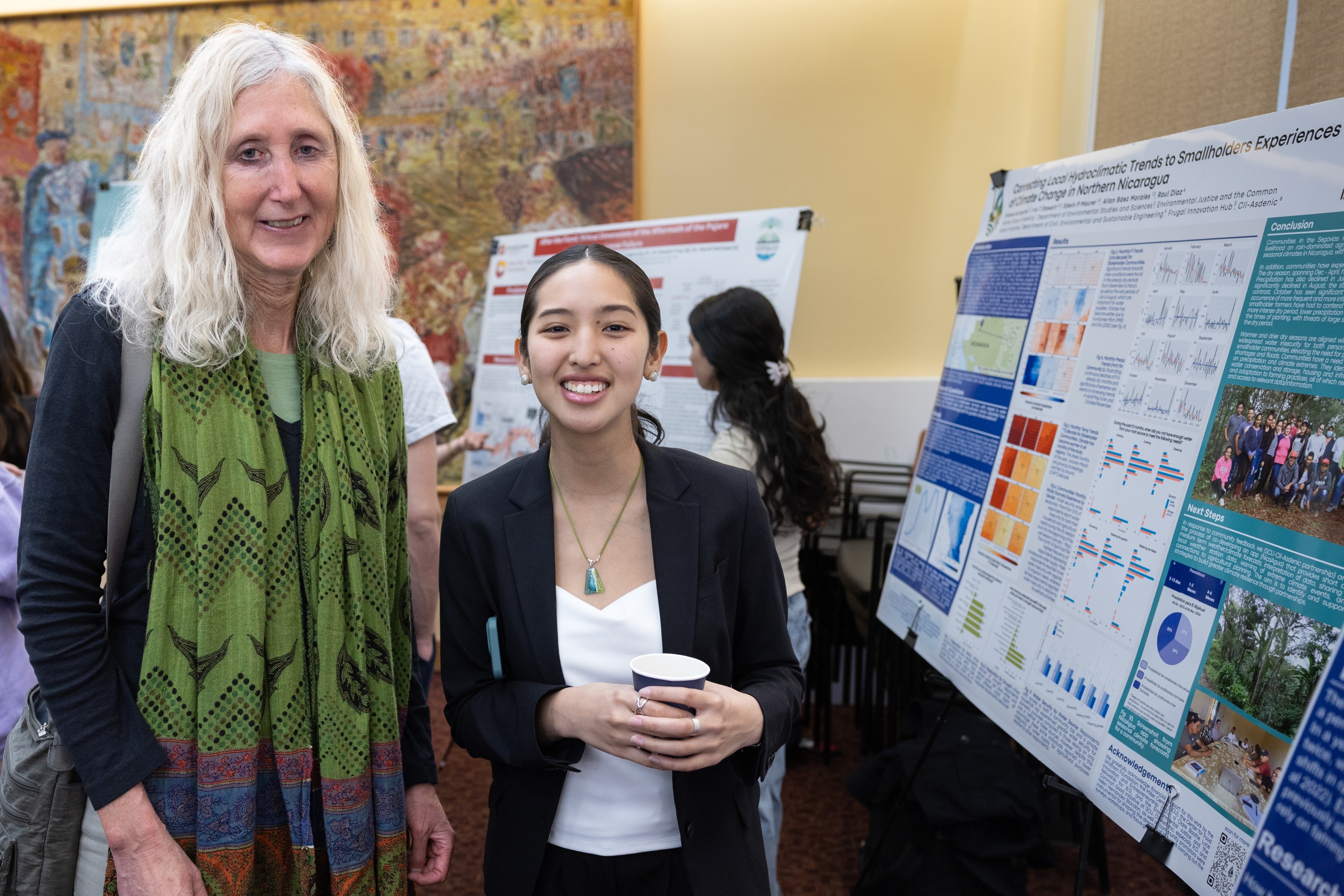
The NicaAgua Mobile app: A Community-Academic Partnership To Support Climate Resilience (Lightning Talk)
Arturo Torres Torres Landa
Smallholder farmers in Nicaragua face rising uncertainty in agricultural planning as climate variability and extreme weather intensify. While climate data and forecasts exist, they often do not reach rural communities due to technical, institutional, and interpretive barriers. NicaAgua is a community-centered, frugally designed mobile application that converts complex climate information into locally relevant decision-support tools. Built in partnership with the Nicaraguan NGO CII-ASDENIC, NicaAgua was co-designed through remote community workshops, stakeholder interviews, and iterative testing with farmers. The app includes four core features: (1) live, hourly weather data from a local station managed by community partners; (2) broadcast alerts for floods, extreme weather, and water-related risks; (3) short- and medium-term climate forecasts; and (4) comparisons between current conditions and long-term historical data to contextualize local climate change. Forecasts are presented through intuitive visualizations paired with brief automated interpretations that flag when expected conditions fall outside historical norms. By combining climate science with community knowledge and participatory design, NicaAgua advances environmental justice, strengthens local climate resilience, and expands equitable access to climate information for sustainable agriculture.
The Hidden Water Footprint of AI: Data Centers and Environmental Justice in California (Lightning Talk)
Rachel Lin-Peistrup, Briana Guingona, Ellie Henrich
Water accessibility and distribution has long been contentious in California. Agriculture, industry, and human populations compete for limited resources, but rapid growth in generative artificial intelligence has further increased water demand. Data centers require substantial water for cooling and indirect use for electricity production. This research investigates the relationship between generative AI, water scarcity, and environmental justice, examining whether new data center development affects socially vulnerable populations. A geospatial database of 261 existing and proposed data centers in California was developed using industry reports, environmental planning documents, and publicly available project information. Spatial analysis in ArcGIS Pro integrated this data with a Social Vulnerability Index and a Water Scarcity Index. Results indicate that while data centers are commonly located within major technology clusters, recent large-scale facilities are increasingly sited in areas served by smaller or less secure water systems and with greater social vulnerability. Over 120 identified centers are located in state-designated disadvantaged communities. Data on water sources, cooling technologies, and operational consumption remain inconsistent. This lack of transparency complicates future water planning, obscures the environmental impacts of AI infrastructure, and highlights the need for improved reporting and policy frameworks that incorporate environmental justice.
Dimensions of Thermal Inequity: Microscale Thermal Comfort Analysis in hot Dryland Climates (Lightning Talk)
Jake Dialesandro
Extreme heat is a growing threat to public health in hot dryland regions, where rising temperatures interact with urban form to produce highly localized patterns of thermal exposure. While city-scale heat metrics are commonly used to assess heat risk, they often obscure microscale variability that shapes everyday thermal experiences and reinforces social inequities. This study examines the spatial dimensions of thermal inequity through high-resolution modeling of microscale thermal comfort across urban environments in hot dryland climates. Using the SOLWEIG-GPU model, we simulate mean radiant temperature (Tmrt) and sky view factor (SVF) at meter-scale resolution under representative summer conditions. Inputs include detailed digital surface models, vegetation structure, and locally observed meteorological forcing data. Model outputs are analyzed in relation to land cover, urban morphology, and neighborhood characteristics to evaluate how built form and vegetation influence human thermal exposure across space and time. Results reveal pronounced intra-urban disparities in thermal comfort, with elevated Tmrt values consistently associated with areas characterized by high impervious surface cover, limited tree canopy, and high sky view factor. Shaded environments and vegetated corridors substantially reduce daytime radiant heat loads, highlighting the disproportionate cooling benefits experienced in greener, lower-density urban areas.
A Toxic Tour of SCU (Creative Work)
Kate Parent
A Toxic Tour of SCU is a short documentary that examines the legacy of hazardous waste sites surrounding SCU’s campus to explore how environmental risk, land use, and regulatory decision-making intersect with sustainability and environmental justice. The film incorporates public records and reports in tandem with the histories of 3 nearby locations: a former gas station site remediated into an apartment building, a coal gas plant utility yard turned parking lot, and a military contractor site, which is now a Caltrain Station. The project translates environmental data into an accessible narrative for public audiences through archival research and site-based visual storytelling. While the film acknowledges contamination as an immediate health crisis, it avoids promoting fear, but instead promotes awareness by identifying how environmental risk is assessed, managed, and normalized through regulatory standards that define “acceptable” levels of harm. Findings reveal that many sites deemed “remediated” remain unsuitable for first and second spaces such as housing, schools, or childcare, which affects vulnerable populations and limits sustainable redevelopment. The film argues that sustainability requires not only containing past contamination, but also acknowledging the long-term social, economic, and ethical consequences. The film advocates for the consideration of how present-day decisions about hazardous materials will shape environmental justice for future generations.
Session 5B | 2:15 - 3:15 pm
The Pedagogy of Justice: Campus as a Living Laboratory
Using the Campus for Applied Learning about Sustainability and Justice: Promising Practices and Interdisciplinary Themes (Lightning Talk)
Chad Raphael
Far from being isolated ivory towers, higher education campuses offer ideal sites for students to engage in applied learning about real-world sustainability issues, and the interconnections between the campus and larger environmental, economic, and social systems. What curricular and pedagogical frameworks can inform the design of this kind of transformative, campus-based, experiential learning about sustainability? What themes can serve as bridges across multiple disciplines to help students learn to address “wicked problems” of sustainability on campuses? Drawing on the scholarship of teaching and learning, this presentation introduces key frameworks for sustainability curriculum and teaching methods. The presentation also highlights the theme of communication as one promising interdisciplinary lens for understanding and addressing contemporary crises of sustainability and justice. Throughout, the discussion is illustrated by brief examples of how educators are employing these educational frameworks and addressing the role of communication across the curriculum in many fields. This topic can help anyone who educates about sustainability – including faculty, staff, and students in classes and in co-curricular activities (such as student clubs, RLC programming, etc.) – to design engaging learning opportunities using the campus.
The Campus as Lab: Leveraging Social Psychology for Sustainability (Lightning Talk)
Katy Bruchmann
How can we transform undergraduate research training into an engine for sustainability? This presentation details a psychology research practicum course at Santa Clara University designed to move beyond laboratory paradigms toward real-world sustainability interventions. By centering the course on behavioral science, students apply theories of social comparison and descriptive norms to design and execute field experiments targeting sustainability behaviors on campus. Over several iterations of this course, student-led projects have addressed diverse sustainability challenges, including: Waste Reduction: Decreasing single-use plastic bottles and utensils in dining facilities. Circular Economy: Increasing engagement with campus resources like Bucky’s Closet. Waste Diversion: Improving composting accuracy to reduce recycling contamination. Dietary Shifts: Successfully reducing red meat consumption among the student body. Beyond the research experience and data, the course has produced tangible student-coauthored outcomes: three reports to campus stakeholders, two conference presentations, and one peer-reviewed publication (with another in preparation). Ultimately, this course demonstrates that psychological research is not just an academic exercise but a tool for environmental justice. By choosing to center sustainability in the curriculum, students are empowered to foster a more sustainable future for the SCU community.
Community-Engaged Research Projects in School Settings: Science Teachers’ Practices and Reflections (Lightning Talk)
Won Jung Kim
Community-Engaged Research (CER) is a justice-oriented research paradigm that emphasizes equitable and reciprocal knowledge co-production with community members and organizations, sharing power, benefits, contributions, and responsibilities among all participants. This study explores nine teachers cases of facilitating CER projects in their respective school settings, aimed to support students’ critical consciousness and action for environmental issues and injustices. By analyzing data from teacher community meetings and individual interviews in the framework of four dimensional CER, this study articulates classroom practices that addressed the distribution, procedure, recognition, and transformation dimensions of CER as well as the positive impacts and challenges of these implementations. Findings report teacher practices categorized by the CER dimensions they addressed (what of the practices) and the instructional strategies they employed (how of the practices), compare the practices’ frequencies, and illustrate the varying manifestation of the practices for CER by illustrating three teachers’ CER cases. Findings also document the positive outcomes of CER in student empowerment, as well as the challenges related to resources, assessment, and stakeholder skepticism, underscoring the need for systemic support to enhance CER’s effectiveness. This study relates to the symposium's theme of sustainability, particularly the need of quality education and life long learning.
Rethinking the Global (Lightning Talk)
Jeffrey Burkholder
I propose a Lightning Talk that reflects on the pervasive appeal to the “global”—global reach, global thinking, global engagement, etc. Although the term is now unavoidable, it’s important to recall that the “globe” as a concept is historically contingent and problematic. Drawing on my own research and Francophone environmental philosophy, I argue that the image of Earth as a uniform sphere fosters a totalizing perspective that obscures situated forms of inhabitation, relational complexity, and unequal power relations. As a result, “global thinking” can in fact run counter to the goals of sustainability and environmental justice explored in this symposium.
The global scale often functions as an abstraction—one that shapes contemporary crises, from climate change to the populist MAGA backlash against “globalism.” It is reproduced not only through global branding and internationalization discourse, but also through technological systems such as LLMs, which promise a global view from nowhere. In contrast, my talk emphasizes the value of situated, relational knowledge and sustained—as well as sustainable—forms of engagement.
Leaning on my research and the ethical framework articulated in Laudato Si’, I argue that multilingualism and intercultural pedagogy offer a critical alternative to superficially “global” models of cultural encounter. Rather than global management or detached oversight, sustainability emerges as a practice of situated care and attentive dwelling.
Cultural Sustainability through Immersive Media and Play
OhloneAR (Lightning Talk)
Anthony Ventura, Isabella Gomez
The OhloneAR project at Santa Clara University seeks to address the erasure of Native history and culture through co-designing an augmented reality (AR) experience in collaboration with the Ohlone community. The research question explores how location-based, interactive AR can empower Indigenous communities and raise public awareness about their ongoing presence, particularly at Mission Santa Clara. OhloneAR aligns with SCU’s commitment to sustainability, specifically cultural sustainability, by amplifying Indigenous cultural sovereignty through immersive storytelling. This project’s initiatives further the university’s commitment to benefit the common good and allow both social groups and their individual members access to their own fulfillment according to impact 2030. The project methodology involves engaging Ohlone youth, Santa Clara students, and tribal members to adapt Ohlone traditions for AR, centering their input and perspectives. OhloneAR relies on interdisciplinary cooperation between SCU students focusing on coding, design, audio, and storytelling. The tour highlights multiple campus locations, such as the virtual reconstruction of the historic Ohlone village, the Chochenyo names of Native individuals, and tributes to ancestors, offering a dynamic, educational experience for visitors. Expected results suggest that the AR tour will promote environmental justice by educating the public and combating Indigenous erasure. By demonstrating how AR can enhance public engagement with cultural heritage sites, the project serves as a model for cultural preservation, and social justice. Ultimately, this work contributes to SCU’s broader sustainability goals by empowering communities and fostering greater cultural and environmental awareness on campus.
The Art of the Game: Natural and Temporal Expressions of Culture in Hanafuda (Lightning Talk)
Grace Fujii
Hanafuda is a traditional Japanese card game that has brought cultural education and entertainment to generations of residents in Japan and Hawai’i. Drawing from personal experiences and an art-driven case study approach of specific cards’ cultural symbols, this project contextualizes the cards’ bold prints through cultural perspectives of religion, time, and nature. The project further proposes a “Hawaiian-kine” deck of cards to employ an analogous framework by centering Indigenous perspectives of and relationships with land and time. Further implications of cultural perspectives in game aesthetics can be similarly applied as a general model for accessible cultural education.
Session 6 | 6:30 - 8:00 pm
Welcome Remarks: Dean Daniel Press (College of Art and Sciences)
Welcome Remarks from Dean Daniel Press (College of Art and Sciences)
Advancing Climate Action in the City of Santa Clara
Stovetop Electrification in Santa Clara County (Lightning Talk)
Margaret (Gigi) Jones
This project examines the adoption of electric cooktops in the City of Santa Clara and the barriers preventing residents from upgrading. It will assess current adoption rates and identify factors such as cost, access to rebates, housing constraints, and awareness of electrification programs. The project supports Santa Clara’s master electrification plan. It aligns with the buildings and energy sector goals of the City’s Climate Action Plan by promoting energy efficiency and increasing the use of renewable energy. A key focus is ensuring that underserved and historically underrepresented communities are included in electrification efforts. By centering equity and climate justice, this research aims to reduce energy burdens and support decision-making that benefits communities most vulnerable to climate change impacts. The final deliverable will be a policy brief recommending strategies, incentives, and practices the City can implement to accelerate equitable electric cooktop adoption.
T.E.K. and Ecosystem Resilience: Implementing a Native Plants Landscaping Policy (Lightning Talk)
Isabella Gomez
Native plants play a significant role in biodiversity and ecosystem resilience, providing habitats for other organisms and supporting native pollinators. They also minimize water and fertilizer use compared to other introduced plants, thereby improving public work budgets by cutting water costs. Alongside sustainability benefits, native plants also hold deep cultural significance for local native tribes, with specific plants being used for basketweaving and medicinal purposes. Despite these numerous benefits, native plant implementation isn’t widespread, as many Bay Area cities and state policies prioritize introduced plants over native plants. For example, most city park landscaping and planting guide suggestions prioritize the aesthetics of introduced plants over native plants. The current official Santa Clara County landscaping palette has only 1 out of 171 plants (not including the native grasses category) classified as being native to the Santa Clara Valley. My study will investigate what Bay Area cities are doing to implement native plants in park master plans, and how they are incentivizing their residents to plant native plants on their properties. The goal of this study is to provide implementable suggestions and guidelines for the City of Santa Clara that will incentivize local cities, residents, businesses, and parks to embrace planting more native plants over introduced plants.
The Future of Heat Adaptation in Santa Clara in the Face of Climate Change (Lightning Talk)
Sofia 'Ximena' Garcia-Isabelli
Communities of color are disproportionately affected by urban heat islands within the City of Santa Clara, California. Climate change increases the temperature, length, and frequency of extreme heat events. Identifying specific heat adaptation solutions to implement within vulnerable communities is imperative to improving urban resilience to climate change. A ranking based on cost-efficiency, social benefits, and sustainability of urban tree-planting initiatives, bioswales, solar shade, cool pavement, and painted roofs will guide which solution to implement. This study identifies the neighborhoods predicted to be most impacted by climate change through the use of Santa Clara University’s WAVE High Performance Computing (HPC) projected to specific years that align with the City of Santa Clara’s Climate Action Plan (CAP) target dates. The Social Vulnerability Index, developed by past SVPSF Fellows, was used to identify vulnerable communities through demographic data such as socioeconomic status, racial and ethnic minority status, and household characteristics. This demographic data was overlaid with geospatial data including land surface temperatures, locations of impervious surfaces and urban tree canopy, and the normalized difference vegetation index (NDVI). Using ArcGIS Pro, resulting graphics produced by geospatial analysis enabled the visualization of predicted impacts and served as a recommendation for targeting areas for the initial installation of green infrastructure.
Embedding Sustainability into Campus Milestones and Mindsets
Reducing Waste Through Graduation Gown Reuse (Lightning Talk)
Drew Rogers, Sophie Sharp, Eliana Aschheim
Graduation is a time to celebrate, but traditional single-use caps and gowns create unnecessary waste and impose an additional financial burden on students. This project explores graduation gown reuse programs as a simple, practical way universities can reduce textile waste while improving access and affordability for students. Using a benchmarking approach, we examined gown reuse programs at peer institutions to understand how they are structured, managed, and promoted. Our analysis draws on university sustainability reports, program websites, and interviews with campus staff to identify what works well and where programs tend to struggle. Key findings point to the importance of clear collection and distribution systems, strong campus partnerships, and thoughtful messaging that frames gown reuse as both an environmental and equity-focused solution. Based on these insights, we developed a proposed framework for implementing a graduation gown reuse program at Santa Clara University that aligns with the university’s sustainability goals and commitment to the common good. This project highlights how small, well-designed campus programs can create meaningful environmental impact while making important milestones like graduation more inclusive.
Sustainability Training Program Proposal (Lightning Talk)
Daniel Lowe, Olivia Imai, Gus Vaughan, Kelly Rickwa
Santa Clara University’s Sustainability Playbooks provide guidance for advancing campus wide sustainability through individual action, yet their impact remains limited due to low visibility and fragmented application. This project aims to improve the visibility of the Playbooks and other programs by designing a Sustainability Training Program to connect sustainability resources with actual action on campus. The training would provide learning pathways for different campus roles, showing how sustainable behaviors can be applied in classrooms, labs, offices, residence halls, events, and homes. Partnering with the Center for Sustainability, the goal of this program is to engage more of the SCU community in the current systems regarding sustainability. The project deliverables include a modular training template that integrates SCU’s existing Playbooks and a prototype module demonstrating the approach. We also plan to provide meaningful suggestions regarding future implementation, including potential classroom integration, evaluation plans, and feedback systems for later down the line. The modules would be aligned with multiple UN Sustainable Development Goals (SDGs). For example, one module that would align with SDG 12 would guide students through reducing waste in residence halls. By promoting sustainability education as an action oriented experience, this project aims to enhance engagement and further integrate sustainable practices into Santa Clara University’s culture.
Impact 2030: Coordination, Communication, and Collective Action
Strategic Communication to Increase Campus Sustainability Engagement at Santa Clara University (Lightning Talk)
Olivia Chi, Sophie Sharp, Reyna Silva
As student communications officers for Santa Clara University’s Center for Sustainability, we examine how strategic, audience-specific communication can increase awareness, engagement, and participation in campus sustainability initiatives. This is relevant because Santa Clara University has numerous impactful sustainability programs, yet their effectiveness is limited if students, faculty, and staff are unaware of them or unsure how to engage. The main methods followed for this work include analyzing communication channels and engagement metrics, expanding outreach through tabling and campus events, trialing new digital and physical engagement strategies, collaborating with campus partners, and creating tailored content across multiple platforms (newsletters, social media, websites, and digital signage). After gathering data from the 2025-2026 academic year so far, we identified the optimal factors (time posted, content length and breadth, platform, etc.) to maximize audience engagement. These results are significant because they demonstrate that effective communication is not supplementary but essential to advancing sustainability goals. This work relates to sustainability and environmental justice by increasing access to information and ensuring that sustainability initiatives reach and empower the broader campus community.
Sustainability Integration in Academia (Lightning Talk)
Estefana Mejia, Pragna Burra
As Community Impact and Curriculum Transformation coordinators for the Santa Clara University Center for Sustainability, we examine how to facilitate interdisciplinary involvement from faculty and students in order to integrate Sustainability and Justice into the university’s curriculum. This is relevant, because we want to ensure sustainability can be used in different perspectives within higher education and professional careers. The main methods followed for this work includes recruiting staff and students, providing presentations about our sustainability minor, and measuring outreach and participation reports. After presentations and recruitment have been concluded, we reached a total of 398 students and 892 impressions upon staff. These results are significant, because we were able to gain 9 new students who decided to join our sustainability minor and 49 staff that integrated sustainability into their curriculum. This work is relevant because we increase exposure and accessibility of integral ecology across various academic disciplines, which are applicable to diverse career paths.
Scraps to Solutions: A Multi-Pronged Approach to Organic Waste Diversion in Higher Education (Lightning Talk)
Nora McBride, Samuel Waterman
As a Resource Management Student Coordinator and a Sustainability Programs Specialist for the Santa Clara University Center for Sustainability, we examine how to divert organic waste across campus from municipal landfills. This is relevant because the decomposition of organic materials in the landfill produces methane, a major greenhouse gas. The main methods followed for this work include waste sorting volunteer events, waste sorting trainings for Dining Services staff, and promoting reusable serviceware in place of single-use serviceware. After seven months, we found a 17% decrease in organic waste contamination in landfill dumpsters from the food court in Benson Memorial Center. These results are significant, because this demonstrates that regular waste sorting trainings and student outreach can lead to noticeable reductions in landfill waste contamination. This work relates to sustainability and environmental justice because it targets methane emissions from organic waste that is sent to landfills and promotes equitable access to waste sorting education.
Data-Driven Decision Making with STARS (Lightning Talk)
Dylan Clarke, Robert Bolival
As the Climate Action and Strategic Planning student coordinators for the Santa Clara University Center for Sustainability, we partake in data-driven decision-making for SCU using the Sustainability Tracking, Assessment, & Rating System, or STARS. STARS Data Tracking is the process of collecting and recording sustainability-related data across Santa Clara University, and it measures SCU’s performance in areas such as academics, operations, and engagement. We create the spreadsheet with documents for each STARS credit and make it as easy as possible for the data collectors across the university to insert their data accordingly. We collect data from a variety of campus-related metrics, including commute statistics, energy/resource consumption, academic curricula, administration, and much more, to visualize university/environmental trends and help assemble our STARS reports, with the goal of receiving a Platinum certification. Our data collection work for STARS is important because our data helps advance SCU’s ability to achieve our sustainability goals by identifying next steps and future directions based on said data. For instance, we have benchmarked other universities’ STARS reports to suggest new programs to Parking & Transportation Services to promote more sustainable commuting methods. Overall, data collected for and from STARS is instrumental in assessing SCU’s progress in advancing and embodying environmental justice.
Creating a Circular Economy Culture at SCU (Lightning Talk)
Kendra Angelito Palominos, Tikdem Heffernan
What is a circular economy? It is a system that moves away from traditional single-use practices and promotes the reuse and regeneration of materials. As the student coordinators for circular economy operation and education for the Santa Clara University Center for Sustainability, we aim to establish this circular economy on campus. More specifically, in response to the overconsumption and fast fashion that have been hurting the planet, we work to divert clothing waste from landfills through Bucky’s Closet, an on-campus thrift store where all items are free for students, staff, and faculty. Through collaborating with different clubs and residents, we have recruited over 70 volunteers for Bucky’s Closet. After two years, over 8,000 lbs of clothing have been saved from the landfill. In addition, we organize events such as Eco-fashion show, upcycling workshops, and zero waste move-out to educate individuals on waste diversion practices in their daily lives. The Eco-fashion show has over 100 attendees each year, and Zero-waste moveout has saved 3,800 pounds of reusable items from the landfill in 2025. These results are significant because it demonstrates that curricular economy-related programs and efforts make living conscientiously and sustainably accessible to the SCU community.
About the event organizers:
- Center for Sustainability serves as a catalyst for transformative climate action, connecting academics, operations, and campus life to empower students, faculty, and staff in building a more humane, just, and sustainable world. The CFS team—including dedicated staff, faculty associates, and student leaders—drives campus-wide sustainability efforts, cultivates vibrant garden programs, and supports student-led research that explores the intersectional dimensions of the climate crisis and local solutions throughout the academic year.
- Department of Environmental Studies and Sciences offers interdisciplinary programs that provide students with the intellectual foundation they will need in addressing crucial environmental challenges of the 21st century, such as human population growth, urban sprawl, deforestation, global climate change, waste disposal, air and water pollution, loss of biodiversity, and the need for renewable energy.
- Environmental Justice and the Common Good Initiative fosters community-driven research for social and environmental justice. We conduct research and provide training, resources, and networking to support community-driven research partnerships for environmental justice among community organizations, Santa Clara University faculty and students, and other academic institutions in Northern California and Jesuit higher education.
Thank you to the symposium co-sponsors!
- The College of Arts and Sciences advances fundamental knowledge and addresses the challenges of society by promoting discovery, deepening knowledge, and fostering artistic expression. The largest academic unit at Santa Clara University, the College offers degree programs in the arts, humanities, natural sciences, and social sciences, with interdisciplinary and cross-disciplinary options.
- The Division of Mission and Ministry is charged with clearly articulating and broadly communicating Santa Clara University’s Jesuit, Catholic mission and values, and comprises Campus Ministry, the Ignatian Center for Jesuit Education, and the Mission Church. Building on a strong campus commitment to the University’s Jesuit, Catholic mission and values, the team oversees the development and implementation of initiatives to engage students, faculty, staff, administrators, trustees, alumni, and benefactors in deeper education and ongoing formation, helping these groups to make the mission their own and apply it concretely to their work and life.
- The Miller Center for Global Impact has supported social entrepreneurs working to end poverty and build a more just, sustainable world for nearly 30 years. Through mentorship, tailored curricula, community, and shared learning, we help leaders scale their impact while engaging Santa Clara University students in hands-on, real-world experiences that connect classroom learning with global challenges.
- The Sustainable Business Institute (SBI) prepares future leaders to develop a sustainable business mindset with a long-term outlook that serves all stakeholders without compromising the profit motive.
-
The University Operations Division oversees a comprehensive range of campus services dedicated to enhancing the experience for all members of the SCU community. Our division includes Facilities, Projects and Planning, Environmental Health & Safety, the Center for Sustainability, Cultural Resource Management, Utilities and Mail Services. We ensure the University's physical and built environment operates efficiently and sustainably while honoring our institution's rich history.
- ENACT, a program within the Santa Clara Community Action Program (SCCAP), is an advocacy and discussion group working to create dialogue about environmental injustices and push the university to divest from fossil fuels. Attending ENACT events is a way for students to get involved in environmental action on campus, and events are often focused on ways to explore creativity and social connection as a form of action.
- Into the Wild is a student-led outdoor adventure organization at Santa Clara University that builds community through shared experiences in nature. By bringing students together on trips that emphasize leadership, inclusion, and reflection, Into the Wild fosters meaningful connection, personal growth, and a strong sense of belonging on campus.
- Plant Futures at Santa Clara University focuses on education and multi-disciplinary learning around building sustainable, just, and plant-centric food systems while serving as a space and catalyst for professional development with careers in plant-centric food sectors.